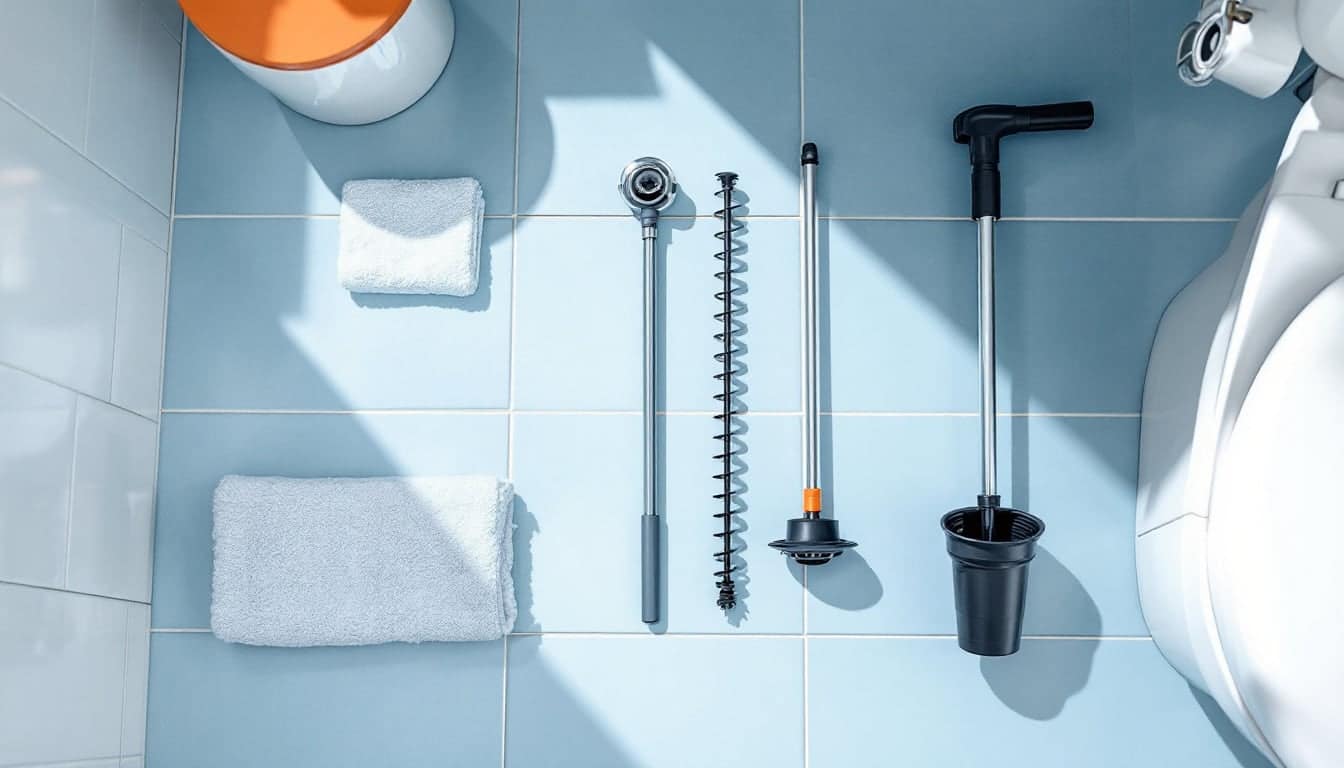
A drain snake is what you reach for when the plunger has done its best and the water is still sitting there, looking at you. The trouble is that "drain snake" covers four different tools, and the one people grab first is often the wrong one. Put a sink snake down a toilet and you'll scratch the bowl and quite possibly lose the cable in the trap.
So: what each tool is, which clog it's built for, how to use the two you're most likely to own, and what to leave alone.
Some tool links earn us a commission. As an Amazon Associate I earn from qualifying purchases.
What is a drain snake?
A drain snake is a length of flexible spring-steel cable, wound like a long thin spring, with a corkscrew or a small bulb on the end. You feed it into the pipe and turn it. The spinning head either bores through the clog or wraps the clog around itself so you can pull the lot back out.
Plumbers say auger, shops say snake. Same thing. What matters is length, cable thickness and the shape of the head, because those decide where the tool can go. A plunger moves water. A snake moves the clog.
The four tools sold as drain snakes
| Tool | Typical reach | Built for | Keep it out of |
|---|---|---|---|
| Plastic barbed snake | 18 to 24 inches (45 to 60 cm) | Hair just below a bathroom sink or shower drain | Toilets, kitchen grease, anything past the trap |
| Hand drum auger | 15 to 25 feet (4.5 to 7.5 m) | Sink, tub and shower lines beyond the trap | Toilets, the main sewer line |
| Cordless or electric drum auger | About 25 feet (7.5 m) | Deep or stubborn clogs in 1-1/4 to 2 inch (32 to 50 mm) lines | Toilets, the main line |
| Toilet (closet) auger | 3 to 6 feet (0.9 to 1.8 m) | The trap moulded inside the toilet bowl | Sinks, tubs, anything past the toilet |
Plastic drain snake
A forearm-length strip of plastic with small barbs along the edges, cheap enough to bin after a messy job. Push it down, twist, pull up. Hair comes back as a grey, dripping rope you will not enjoy.
For a bathroom sink or shower that's slow because of hair, a plastic barbed drain snake is usually all you need. It won't get round the trap. It doesn't have to, because most hair clogs live in the top few inches, wrapped round the stopper linkage or snagged under the drain cover.
Hand drum auger
A coil of 1/4 inch (6 mm) cable stored in a plastic drum, with a handle to turn it and a thumbscrew that locks the cable at whatever length you've fed out. This is the proper sink and tub snake. It goes round the trap, or straight into the wall pipe if you take the trap off, and on down the line.
It's slow and manual, and you feel exactly what the head is doing. That's the point.
Electric drain snake and cordless augers
Same idea, but a motor spins the drum. Cordless ones run off a power tool battery; others plug in or clamp into a drill. The motor gives steady speed and more turning force than a wrist, which helps with packed grease or a clog 15 feet (4.5 m) down.
More force cuts both ways. If the head snags and you keep the trigger down, the cable twists, kinks or loops back on itself in seconds. Short bursts. Read the manual first, because every model has its own rules about forward, reverse and feeding.
The heavy sectional machines rented out for main sewer lines are a different animal. The cable can break a wrist when it binds, and the clog is often roots or a broken pipe. Plumber territory.
Toilet auger
Also called a closet auger. A short, stiff cable inside a rigid tube, with a crank at the top and a bend at the bottom. The bend wears a rubber or plastic boot, so metal never touches porcelain. You crank the cable out through the boot and it threads round the S-shaped trap moulded inside the bowl.
Three to six feet covers the trap and a little beyond, which is where nearly every toilet clog sits.
Toilet auger vs snake: why you don't swap them
Two things: the bend and the boot.
A toilet trap is a tight, glazed curve. A drum auger's cable comes out loose and unguided, so it skates round the bowl leaving grey marks, then curls up in the trap instead of following it. Yank it back and you can chip the glaze. Those scratches are permanent and collect stains for good.
Going the other way, a toilet auger's tube is too fat for a sink drain and its cable too short for a tub line. One job, done better than anything else can do it.
Toolbox
- EasyPlastic barbed drain snake
A cheap barbed strip that pulls hair out of sink and shower drains without taking anything apart.
Buy on Amazon - Medium6-foot toilet auger
A closet auger with a protective boot that reaches past the toilet trap without scratching the bowl.
Buy on Amazon - MediumCordless 25-foot drain auger
A battery-powered drum auger for clogs further down a sink or tub line.
Buy on Amazon
Picked from specifications and published reviews, not tested by us.
Which clog is each one for
Work out where the clog is first. It saves a lot of swearing.
- Bathroom sink slow, nothing else affected. Pull the stopper and use the plastic snake. The guide to unblocking a bathroom sink covers stoppers and traps.
- Shower or tub slow, hair the obvious suspect. Lift the drain cover and go in with the plastic snake. If it comes back clean and the water still sits, use a hand drum auger.
- Kitchen sink still slow after you've cleaned the trap. Hand drum auger, or a cordless one if the clog is far down. Grease and food scraps settle further along the line; what blocks a kitchen drain explains why.
- Toilet won't clear after proper plunging. Toilet auger. Nothing else.
- Something solid went down the toilet. Toilet auger, and skip hard plunging, which wedges a toothbrush deeper into the trap.
- Several fixtures slow at once, or gurgling. None of the above. The clog is in the shared drain. Read the blocked drains guides before you rent anything with a motor.
How to use a drain snake, step by step
This is for a hand drum auger in a sink. A cordless one works the same way, with a trigger instead of a handle.
- Empty the cabinet and lay a towel. Bucket under the trap. Rubber gloves and safety glasses, because the cable flicks dirty water about.
- Pick your way in. You can go down through the drain opening, but the cable often stalls at the trap. Taking the trap off is cleaner. Loosen the two slip nuts by hand or with tongue-and-groove pliers, lower the trap into the bucket, and feed straight into the wall pipe.
- Pull out about 6 inches (15 cm) of cable and tighten the lock. Push the head into the pipe.
- Turn and push. Turn the drum clockwise while pushing gently forward. Release the lock, feed out another 6 to 12 inches (15 to 30 cm), lock, turn. Repeat.
- Feel for the clog. A bend feels like firm resistance that eases as you keep turning. A clog feels soft and spongy, or the handle gets heavy as the cable winds up.
- Work it. Keep turning while you push into the clog a little at a time. Hair wraps onto the head. Grease gets bored through.
- Pull back slowly, still turning the same way. Pull without turning and the clog slides off the head. Wipe the cable with a rag as it comes out.
- Refit the trap and test. Hand-tight nuts, then a small extra turn. Run hot water for two minutes and check every joint with dry paper towel.
- Clean the cable. Rinse it and let it dry completely before winding it back. A cable put away wet rusts into one solid spring.
How to use a toilet auger, step by step
Plunge first, properly, with a flange plunger; how to unblock a toilet covers that part. If the plunger hasn't shifted it, or you know something solid went in, get the auger out.
- Gloves on, towels down. If the bowl is near the rim, bail it down to about half full.
- Retract the cable. Pull the crank handle all the way up so only the tip shows at the boot.
- Seat the boot. Rest it at the bottom of the bowl outlet with the curve pointing the same way as the trap, which on most toilets runs towards the back.
- Crank and push down. Turn the handle clockwise while slowly pushing it down. If it stops dead, back off a few inches and try again. Don't lean on it.
- Hit the clog and keep turning. Soft resistance, then either a give or a catch.
- Retract while cranking. Whatever comes up goes in a bag, not back in the bowl.
- Test with a bucket, not the flush lever. Pour a bucket of water in from waist height. If it goes down with a gulp, you're done. If not, go again; a second pass often finishes it.
- Rinse and store. Flush once with the boot still in the bowl, then dry the auger with the cable retracted.
What not to do
- Don't put a drum auger in a toilet. Scratched glaze, stuck cables, and a plumber's visit to pull your snake back out.
- Don't snake a drain after pouring chemical cleaner into it. The cable throws the stuff back at your face. If you've already used some, tell whoever clears it.
- Don't keep turning when the cable kinks or loops. Stop, back it out, straighten it, start again.
- Don't wrap a powered auger's cable round your hand, and wear the gloves the manual asks for. Loose cloth gloves can catch.
- Don't force a cable through plastic pipe inside a wall. You can knock a joint apart and only find out when a ceiling stains.
What to look for in a drain snake
There's no single best drain snake, because there are four jobs. Within each type, look at:
- Cable diameter. 1/4 inch (6 mm) is the usual size for sink and tub lines. Thinner cable kinks easily. Much thicker cable won't turn the tight bends in a 1-1/4 inch (32 mm) bathroom waste.
- Length. 15 to 25 feet (4.5 to 7.5 m) reaches anything inside the house walls. Past that you're into the main line.
- An enclosed drum. Keeps the dirty cable contained, instead of unspooling across the floor like a startled garden hose.
- A boot on a toilet auger. Non-negotiable. Check it's fitted and not split before every use.
- Feed and clutch on powered models. Auto-feed advances the cable without your hand on it, and a clutch eases off when the head snags.
After any snaking job, run plenty of water through the line for a few minutes. A half-cleared clog left sitting in a pipe is just tomorrow's clog with a head start.
Tools for this job Toolbox: Blocked drains

Owen Pritchard
Owen handles everyday repairs (dripping taps, weak showers, blocked loos) and has firm views on coat hangers, caustic soda and anything sold as "flushable".
General guidance only. Gas, electrical and structural work must be done by a suitably qualified person, and rules differ from country to country.


