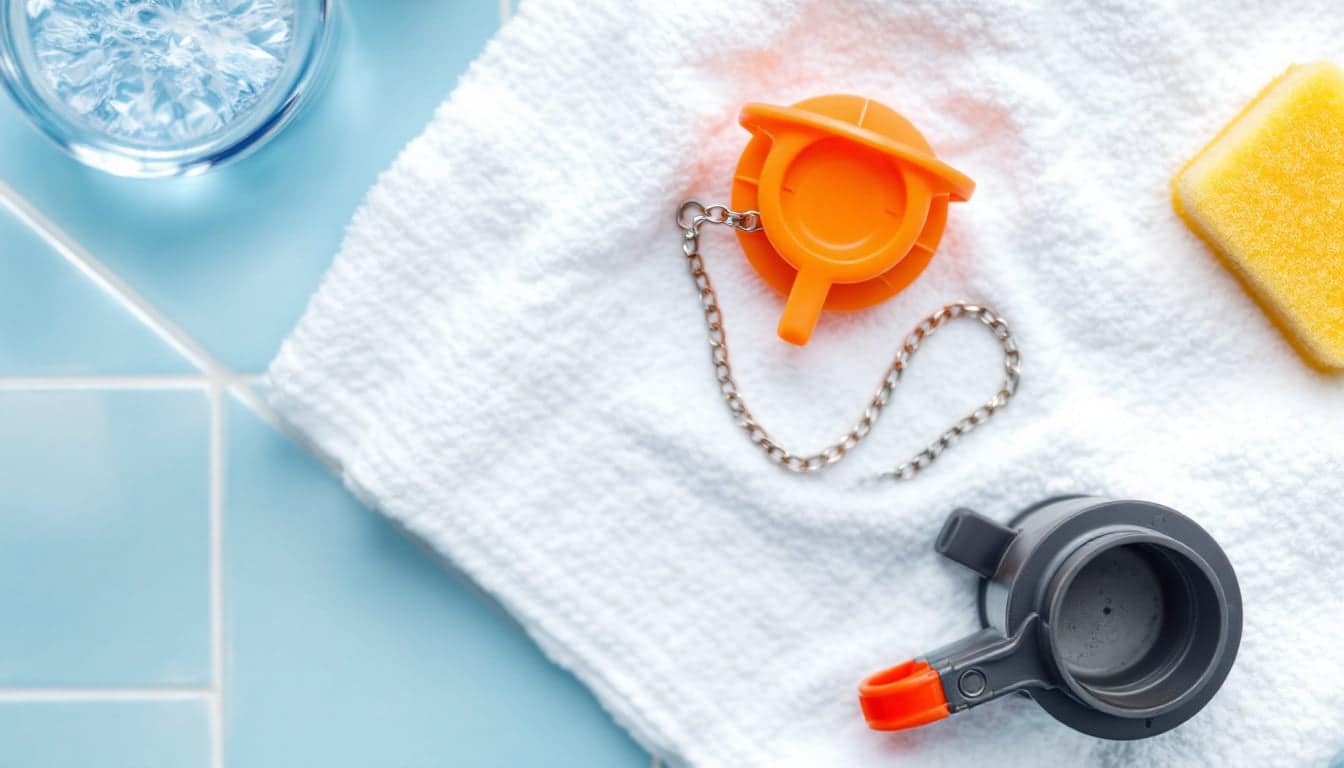
Search for a shower filter for hard water and most of what comes up promises softer hair, calmer skin and a shower head that never scales again. The first two are possible for some people. The third isn't, and it's usually the reason people start looking. So before you spend anything, it helps to be clear about what a shower filter actually takes out of the water.
The short version: inline, vitamin C and KDF shower filters target chlorine, chloramine and the odour that comes with them. They do not soften hard water. The calcium and magnesium that leave white crust on your glass and block the nozzles pass straight through. This guide covers what each filter type does, what genuinely helps with scale, how filtered shower heads compare with inline filters, how often cartridges need changing, and who a shower filter suits.
Some tool links earn us a commission. As an Amazon Associate I earn from qualifying purchases.
Hard water and chlorinated water are two different problems
They get lumped together because both are blamed for dry skin and dull hair, but they are separate things with separate fixes.
Hard water carries dissolved calcium and magnesium. You see it as white or grey scale on chrome, cloudy tidemarks on glass, soap that won't lather and nozzles that slowly block. Hardness is measured in grains per gallon (gpg) or milligrams per litre (mg/L). One gpg is about 17 mg/L, and water above roughly 7 gpg (120 mg/L) is generally described as hard.
Chlorinated water carries a disinfectant your utility adds on purpose so the water stays safe on its way through the pipes. Some utilities use free chlorine; others use chloramine, which is chlorine combined with ammonia and lasts longer in the network. In a hot, steamy shower you notice it as a swimming pool smell, and some people find it leaves their skin feeling tight.
Two quick checks tell you which one you're dealing with:
- Dip a hardness test strip in a glass of cold water from the tub faucet. It takes a minute and gives a rough gpg reading.
- Read your utility's annual water quality report. In the US, community water systems publish one every year. It lists hardness and says whether the system disinfects with chlorine or chloramine.
If the strip reads soft and the report says chloramine, a shower filter may be exactly what you want. If the strip reads 12 gpg and your complaint is scale, read the next two sections before you buy anything.
What shower filters actually remove
Most shower filters use one medium or a blend of the ones below. The packaging rarely explains the difference, so here it is in one place.
| Filter medium | What it targets | Copes with hot water? | Effect on hardness |
|---|---|---|---|
| KDF (copper-zinc granules) | Free chlorine, some dissolved metals; also slows bacteria growth inside the cartridge | Yes | None worth counting |
| Activated carbon | Chlorine, some odours and tastes | Less well; heat and short contact time limit it | None |
| Vitamin C (ascorbic acid or sodium ascorbate) | Free chlorine and chloramine, quickly | Yes | None |
| Calcium sulfite | Free chlorine | Yes | None |
| "Softening" resin beads | A small amount of calcium and magnesium | Yes | Tiny capacity, used up fast, can't be recharged |
| Ceramic or "mineral" balls | Claims vary by product | Varies | Claims are hard to verify |
Two things stand out. First, if your utility uses chloramine, a KDF or carbon filter on its own won't do much, so look for vitamin C in the media list. Second, nothing in that table is a water softener.
Why a cartridge can't soften shower water
It comes down to volume. A 10-minute shower at 2 gallons (7.6 litres) a minute sends 20 gallons (76 litres) through the head. At 10 gpg, that's 200 grains of hardness in a single shower, every day, for every person in the house. A whole-house softener carries tens of thousands of grains of capacity in a tank about the height of a small water heater, and it still has to regenerate with salt brine on a regular cycle. A cartridge the size of a soda can, with a few spoonfuls of resin inside, is overwhelmed within days. After that, the water coming out is as hard as the water going in.
What does help with hard-water scale
If scale is the real problem, the fixes are either bigger than a filter or more routine, and a couple of them cost nothing.
- A whole-house water softener. An ion-exchange softener swaps calcium and magnesium for sodium or potassium. It's the only household option that genuinely removes hardness, and it protects the water heater, dishwasher and every faucet as well as the shower. It needs a spot near the main line, a drain and a power outlet, and it's usually fitted by a plumber. To get a feel for the size you'd need, put your household numbers into the water softener size calculator.
- A salt-free conditioner. These whole-house units change how the minerals behave so they're less likely to form hard scale, without removing them. The water still tests hard and you'll still see some spotting on glass, but scale inside pipes and heaters tends to be softer and easier to shift. No salt and no brine discharge.
- Cleaning the shower head on a schedule. A soak in white vinegar or a citric acid descaler every month or two, plus rubbing the rubber nozzles with your thumb once a week, keeps most heads spraying straight. The guide to hard water and limescale covers descaling methods for heads, aerators and appliances.
- Small daily habits. A squeegee on the glass after each shower, a quick wipe of the chrome, and a fan or open window to dry the enclosure stop tidemarks building up layer on layer.
- A head that's easy to descale. Heads with soft silicone nozzles let you flex scale out by hand, and a handheld head unscrews from its hose and drops into a bowl of vinegar without any tools.
If you rent, the realistic plan is the last three, plus a test strip now and then to keep an eye on things. A whole-house softener needs the landlord's agreement and plumbing work.
Filtered shower heads vs inline filters
Both use the same kinds of media. The difference is where the cartridge sits and what it does to your setup.
Inline shower filters
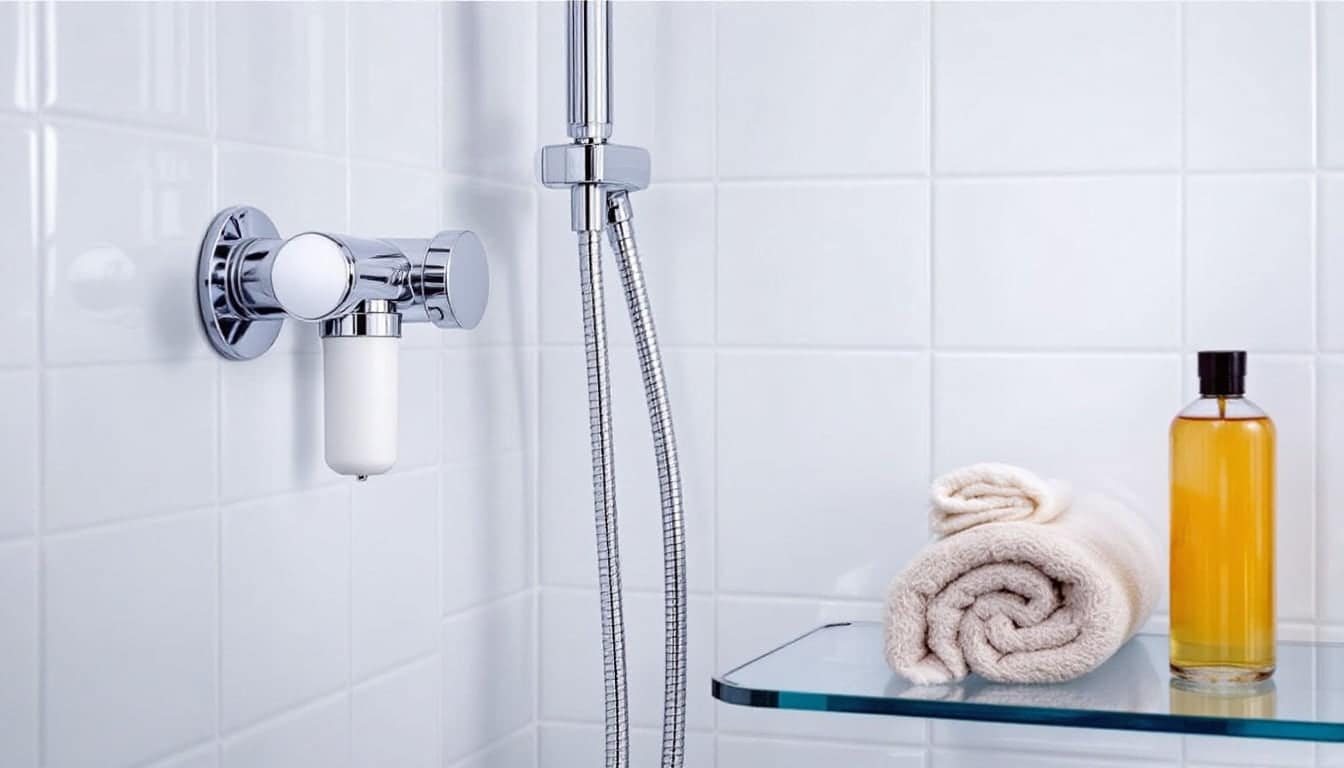
An inline filter screws onto the shower arm, and your existing head screws onto the filter. You keep the head you like, and the cartridge is usually larger, so it lasts longer between changes.
Check these before you order:
- Clearance. The filter adds several inches of length, so the head ends up lower and further from the wall. In a low-ceilinged shower, or for the tallest person in the house, that can matter.
- Thread. Most US shower arms and heads use a standard 1/2-inch thread, so fit is rarely a problem, but check if your head is unusual.
- Weight. A heavy filter plus a heavy head on an old arm acts like a lever on the fitting inside the wall.
Fitting one takes about 10 minutes. Unscrew the head, clean the arm threads, wrap fresh PTFE tape clockwise around them, and screw on the filter. Then tape the filter's outlet thread and refit the head. Hand-tight plus a small nip with a cloth-wrapped wrench is enough.
Filtered shower heads
Here the cartridge sits inside the head itself, or in the handle of a handheld. It's tidier, there's one fewer joint to leak, and nothing adds length. The trade-off is a smaller cartridge, so changes come round sooner, and you're tied to replacement cartridges made for that particular head.
Pairing a filter with a handheld
If you want a handheld for rinsing the tub or washing the dog, an inline filter can sit on the arm before the handheld's bracket. Measure first: the combined length has to clear the head of whoever is tallest.
Toolbox
- EasyInline shower filter
A screw-on shower filter aimed at chlorine and odour; it does not remove the minerals that make water hard.
Buy on Amazon - Easy8-mode handheld shower head with hose
A handheld shower head with several spray settings and a hose, fitted with thread tape and a wrench.
Buy on Amazon - EasyWater hardness test strips
Dip strips that show your water hardness so you can size a softener or set its controls.
Buy on Amazon
Picked from specifications and published reviews, not tested by us.
Cartridge changes
A shower filter with a spent cartridge is just a plastic tube. Most makers rate their cartridges in gallons or months, and hard water shortens that, because scale coats the media and slows the flow through it.
- Note the date. Write the install date on the housing with a permanent marker, or set a phone reminder.
- Watch for the signs. The pool smell coming back, flow dropping, or water spitting from the housing joint all suggest it's time.
- Change it with the shower off. Most housings unscrew by hand. Check the small O-ring or gasket is seated properly before closing it again.
- Flush the new one. Run cold water through a new cartridge for a minute or two. Carbon cartridges often release dark fines at first, which is normal.
- Budget for it. Over a year or two, cartridges usually cost more than the filter housing did. Look at the replacement cartridges before you choose a model, not after.
- Store spares as the packet says. Usually that means sealed, in a cool, dry cupboard rather than on a steamy bathroom shelf.
Who a shower filter suits
A quick decision guide:
- You notice a strong chlorine smell and your water is soft or only moderately hard. A shower filter suits you well. Choose vitamin C media if your report says chloramine.
- Chlorinated water seems to bother your skin, and you've talked it through with your doctor. Worth a try, and easy to take off again if it makes no difference.
- Scale is the main complaint and the strip shows hard water. A filter won't fix it. Put the money towards a descaling routine now and a softener or conditioner later.
- You have both problems at once. A whole-house softener for hardness and a shower filter for chlorine do different jobs and work fine together.
- You rent. An inline filter is a tidy, reversible upgrade. Keep the original head in a drawer so it goes back on when you move out.
- Your water comes from a private well. Wells usually aren't chlorinated, so a chlorine filter does little. Test for hardness, iron and bacteria first and treat what the results show.
If pressure through the whole house is already weak, a filter will make the shower feel weaker still. Run through the usual low water pressure causes before adding anything to the line.
Work it out Water softener size calculator

Hannah Leclerc
Hannah writes about bathrooms and kitchens: planning a refit, keeping wastes flowing and asking installers the right questions before the tiles go on.
General guidance only. Gas, electrical and structural work must be done by a suitably qualified person, and rules differ from country to country.