Plenty of people live in a home for years without knowing what kind of boiler they have. It rarely matters until something goes wrong, and then it matters a lot. The type decides why your shower is weak, whether a pressure gauge is something you need to watch, which shower you can buy, and what a replacement will involve.
There are three common set-ups in homes with a wet central heating system: combi, system and heat-only (also called regular, conventional or open-vent). You can usually tell them apart without tools, without taking any covers off and without going near the gas.
Identify yours in five minutes
Take a torch, and if you have a loft, make sure you can get into it safely.
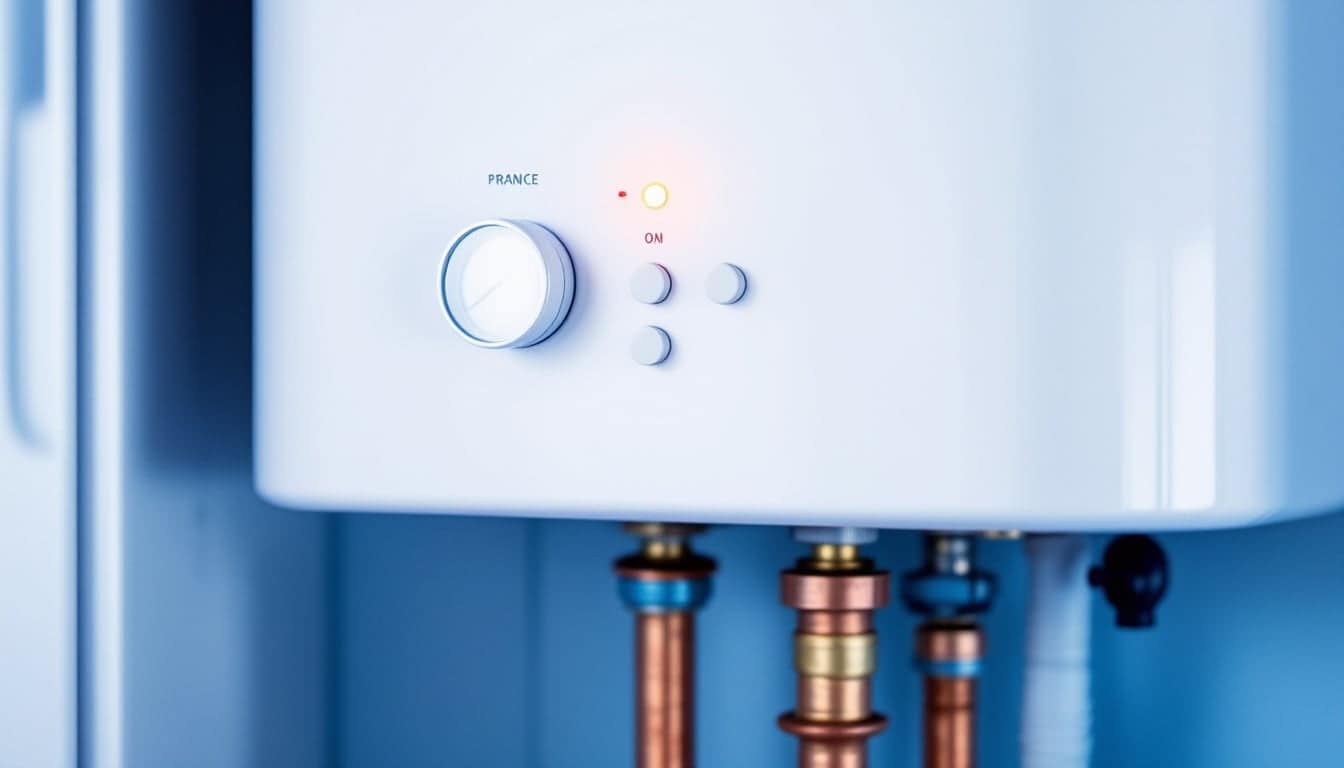
- Minute one: look at the boiler. Is there a pressure gauge on the front panel, on the display or just underneath? Is there a filling loop below it, a short braided hose or a key-operated valve between two pipes? A gauge and filling loop mean a sealed heating system, which points to a combi or a system boiler. No gauge at all suggests a heat-only boiler on an open-vented circuit.
- Minute two: read the data plate. The label inside the front flap or on the casing often includes the model name, and many model names contain "combi" or "system". Write it down while you're there; any engineer will ask for it.
- Minute three: look for a hot water cylinder. Check the airing cupboard, the landing, under the stairs, the garage and the loft hatch area. A large cylinder means stored hot water, so you don't have a combi.
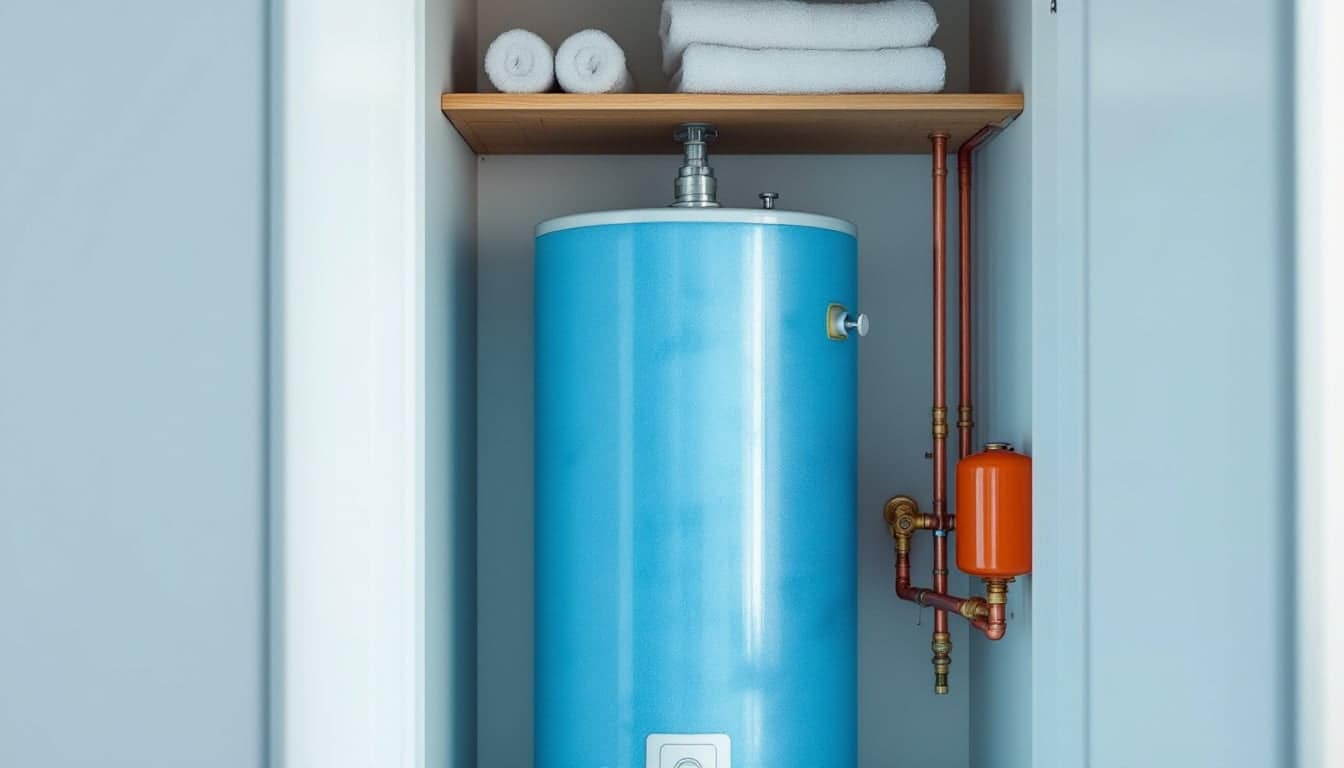
- Minute four: if there's a cylinder, look at its casing. A copper cylinder in foam insulation, with a pipe rising towards the loft, is usually a vented cylinder fed from a cold tank. A white or metal-cased cylinder surrounded by valves, a small funnel on a pipe (the tundish) and its own expansion vessel is usually unvented, running at mains pressure.
- Minute five: check the loft. A large cold water tank plus a much smaller one beside it is the classic heat-only arrangement: the big tank feeds the cylinder, the small one tops up the heating. One large tank and no small one usually means a vented cylinder with a system boiler. No tanks at all means a combi, or a system boiler with an unvented cylinder.
Put the clues together:
- Gauge, no cylinder, no tanks: combi.
- Gauge, cylinder, no small loft tank: system boiler.
- No gauge, cylinder, two loft tanks: heat-only boiler.
If the clues contradict each other, the house may have been altered over the years. A partial conversion, with old tanks left in the loft but disconnected, is common. Note what you found and let an engineer confirm it at the next service.
How each one works
Combi
A combi does two jobs in one box. For heating, it pumps water around a sealed circuit of pipes and radiators. For hot water, it takes cold water straight from the mains and heats it as it passes through, only when a hot tap is open. Nothing is stored. The pump, the expansion vessel and the controls all sit inside the casing.
You'll often hear the boiler fire up seconds after you open a hot tap. That's the giveaway.
System boiler
A system boiler heats a sealed circuit like a combi, with the pump and expansion vessel built in. The difference is hot water: instead of heating it on demand, the boiler heats a cylinder of stored water through a coil inside it. The cylinder is either unvented (fed straight from the mains, at mains pressure) or vented (fed from a cold tank in the loft, at gravity pressure).
Heat-only
A heat-only boiler is the simplest box and the most complicated system. The boiler itself just heats water. The pump, valves and controls are separate, often in the airing cupboard. The heating circuit is open-vented, kept full by a small feed and expansion tank in the loft, with no pressure gauge to read. Hot water is stored in a vented cylinder fed from the large cold tank, and the pressure at your taps depends on how far below that tank they sit.
Side by side
| Combi | System boiler | Heat-only | |
|---|---|---|---|
| Hot water made | On demand | Stored in a cylinder | Stored in a cylinder |
| Hot water pressure | Mains pressure, limited by the boiler's flow rate | Mains pressure if unvented; gravity if vented | Gravity, set by the height of the loft tank |
| Two showers at once | Usually struggles | Usually fine with an unvented cylinder | Depends on tank size and head height |
| Loft tanks | None | None, or one cold tank with a vented cylinder | Cold tank plus small feed and expansion tank |
| Space needed | Just the boiler | Boiler plus cylinder | Boiler, cylinder, tanks, separate pump |
| Heating circuit | Sealed, pressure gauge | Sealed, pressure gauge | Open-vented, no gauge |
| Hot water if the boiler fails | None | Often an immersion heater backup | Often an immersion heater backup |
| Typical fit | Flats and smaller homes, one bathroom | Larger homes, two or more bathrooms | Older homes, especially with weak mains pressure |
What each means for pressure
Two different pressures get mixed up constantly. Heating pressure is the pressure inside a sealed heating circuit, shown on the boiler gauge, and typically around 1 to 1.5 bar with the system cold. Water pressure is what comes out of your taps.
With a combi or system boiler, the heating pressure is yours to keep an eye on. A gauge that keeps dropping points to a leak or a fault somewhere in the circuit, and our guide to a combi boiler losing pressure walks through the causes. Heat-only systems don't have this problem in the same way, because the feed tank keeps the circuit topped up automatically. The trade-off is that a slow leak can go unnoticed for much longer.
For water pressure, a combi and an unvented cylinder both depend on your mains. If the mains is weak or the incoming pipe is narrow, both will disappoint, and the combi will also be limited by how many litres per minute it can heat. A gravity-fed heat-only system gives gentle pressure upstairs and better pressure the further down the house you go. If your showers are weak and you're not sure why, our guide to low water pressure causes helps separate a supply problem from a system limitation.
What each means for showers
- Combi: a mains-pressure mixer shower works well, provided the boiler's flow rate keeps up. Running a kitchen tap at the same time will cut the shower's flow or temperature.
- System boiler with unvented cylinder: strong showers in more than one bathroom, as long as the mains supply can feed them and the cylinder is big enough for the household.
- System or heat-only boiler with vented cylinder: low-pressure showers unless a shower pump is fitted. Pumps are designed for tank-fed supplies, and in many countries water rules forbid pumping directly from the mains.
- Any type: an electric shower heats its own water from the cold mains and works independently of the boiler. Its flow depends on its power rating and on your mains pressure.
Before buying a shower, check the box for the system types it's designed for. Fitting a mains-pressure shower to a gravity supply, or a pump to the wrong pipework, is a common and expensive mistake.
What each means when the boiler needs replacing
Replacing like for like is the simplest route: same type, same position, minimal pipework changes. Changing type is possible but brings knock-on work.
Heat-only to combi. This frees up the airing cupboard and loft by removing the cylinder and tanks. It only suits homes where the mains pressure and flow can supply the household, usually with one main bathroom. Old pipework and radiators that have spent decades on an open-vented circuit may weep once they're put under sealed pressure, so a careful installer will check the system first. You also lose the immersion heater backup and any power shower.
Heat-only to system. This keeps the stored hot water but removes the small feed tank and seals the heating circuit. Swapping the vented cylinder for an unvented one as well gives mains-pressure hot water throughout.
Combi to system. Common when a family outgrows a combi. It needs space for a cylinder and somewhere for its discharge pipe to run.
Two cautions. Any work on a gas boiler or its flue must be done by someone holding the registration or licence your country requires. Unvented cylinders also have their own installation and servicing rules in many places, because they store hot water under pressure with safety valves that must work. And if you might switch to a heat pump one day, think twice before removing the cylinder space. Most heat pump systems need a hot water cylinder.
Which suits which household
A rough guide, assuming a decent mains supply:
- One bathroom, one or two people, little storage space: a combi is hard to beat.
- Two bathrooms, or showers often running at the same time: a system boiler with an unvented cylinder.
- Weak mains pressure that can't be improved: a tank-fed system, heat-only or system with a vented cylinder, often works better than a combi.
- Older house with original pipework, no plans to renovate: keeping the existing type avoids stressing old joints.
Whatever you have, it will last longer with regular care. Our radiator cleaning and combi boiler care guides cover the routine jobs for each type of system.
Work it out Water pressure converter

Cedric Adebayo
Cedric looks after the seasonal side of a home, from winter-proofing pipes to hard water and maintenance calendars. He also covers the practical business of hiring a tradesperson you can trust.
General guidance only. Gas, electrical and structural work must be done by a suitably qualified person, and rules differ from country to country.