A boiler that won't light tends to pick the coldest morning so far. The radiators are cold, a light is flashing, there may be a code on the display, and you can hear a faint clicking that stops after a few seconds. Some of the causes sit outside the boiler and take minutes to check. Others are inside the casing, and those are not for a homeowner, however simple they look.
This is a decision guide. Work through the checks in order, and stop as soon as one of them tells you to. Related guides on boilers and radiators are in the radiator cleaning and combi boiler care section.
If you smell gas at any point, stop. Don't touch light switches or plugs, on or off, and don't use anything with a flame. Open doors and windows, turn the gas off at the meter's emergency control valve if you can reach it safely, leave the property and call your gas emergency number from outside. The number differs by country, so look it up now and keep it near the meter. If a carbon monoxide alarm sounds, get everyone into fresh air and seek medical advice if anyone feels unwell.
What a boiler does when it lights
Knowing the sequence makes the symptoms easier to read. When the thermostat or programmer asks for heat, a modern gas boiler typically:
- checks its sensors, including water pressure and temperature;
- starts its fan, and confirms the flue is clear by sensing the air moving through it;
- opens the gas valve and fires the igniter, which is the clicking you may hear;
- looks for a flame with a sensing electrode, within a few seconds;
- if no flame is detected, shuts the gas valve, pauses and tries again.
After a set number of failed attempts, it locks out. A lockout is the safety system deciding to stop releasing gas into a combustion chamber where nothing is burning. It isn't the boiler being stubborn, and it's the reason behind the reset-once rule further down.
Condensing boilers add one more check. If the condensate drain is blocked, a level sensor stops the boiler running until it clears.
The decision guide
Check 1: Is the boiler powered, and is anything asking it for heat?
Look at the display or the power light.
- Blank display: check that the switched fused spur next to the boiler is on, then look at the consumer unit for a tripped breaker or residual current device. Reset it once. If it trips again, leave it off and call an electrician; an electrical fault is not something to keep resetting.
- Display on, no fault shown: check the programmer shows the right time and is set to on or auto, that a power cut hasn't wiped its settings, and that the room thermostat is turned a few degrees above the current room temperature. Wireless thermostats need working batteries and a paired receiver.
- On a combi, open a hot tap. If the boiler fires and gives you hot water, the burner and gas supply are fine. You're looking at a controls or heating-circuit fault, not an ignition fault.
If the display is on, heat is being called for and nothing lights, go to Check 2.
Check 2: Is gas reaching the house?
Try the gas hob, if you have one.
- Hob lights normally: the supply is fine. Go to Check 3.
- Hob won't light either: look at the emergency control valve by the meter. When the handle lines up with the pipe, it's open; across the pipe, it's closed. If it's closed and you don't know why, don't simply turn it back on. Contact your gas supplier or the emergency service, who can tell you whether there's a problem in the area and how to restore the supply safely.
- Prepayment meter: check the display for remaining credit and any emergency credit. After topping up, some meters need a button pressed before gas flows again; the steps are usually printed on the meter or the supplier's card. Then relight appliances as their own instructions say.
For oil or bottled gas boilers, check the tank level and that no supply valve has been closed. An oil burner that has run dry often needs an engineer to bleed the fuel line before it will fire again.
Check 3: Is it freezing outside, and is the boiler gurgling?
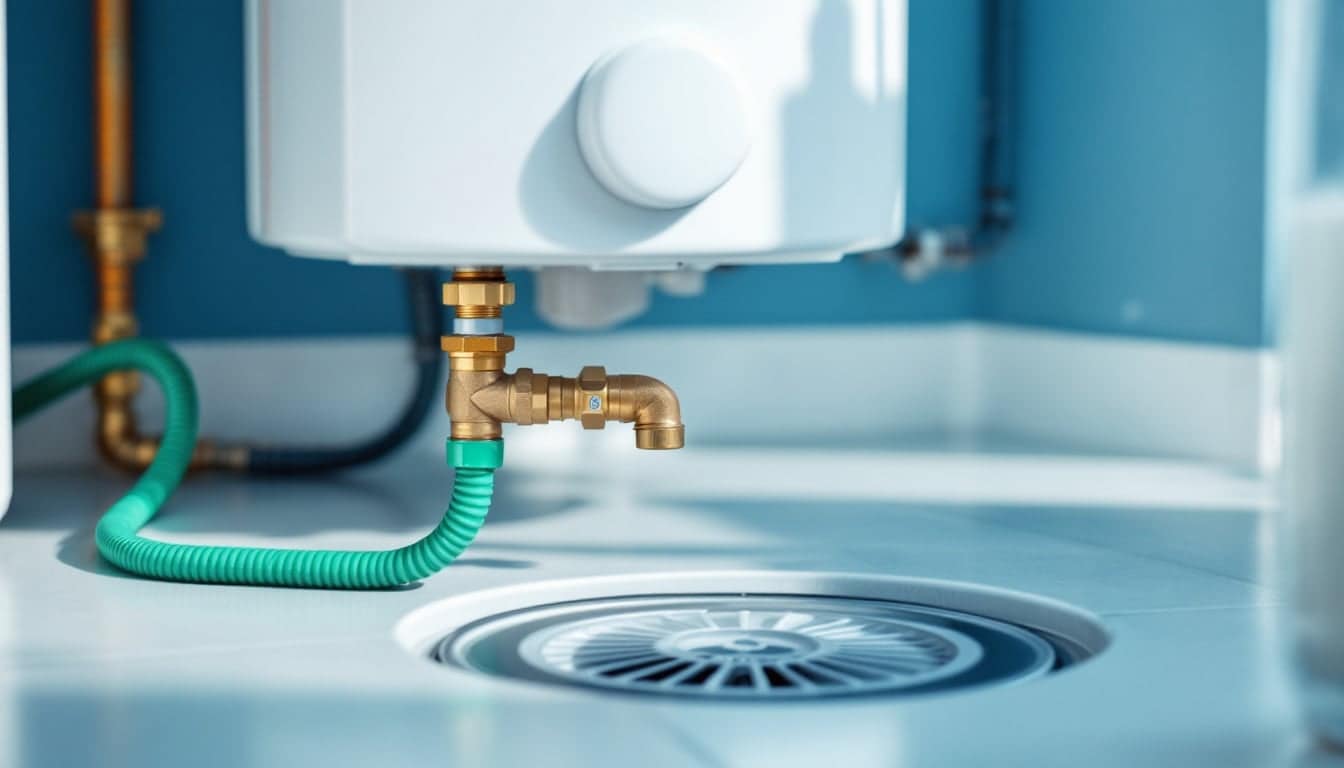
A condensing boiler drains its slightly acidic condensate through a plastic pipe, often running outside to a drain. In a long cold spell that pipe can freeze, the condensate backs up and the boiler shuts down, usually with a gurgle and a fault code. The guide to protecting pipes from freezing explains how to thaw it with warm, never boiling, water. Once it's clear, go to Check 5 and reset once.
Check 4: What does the pressure gauge say?
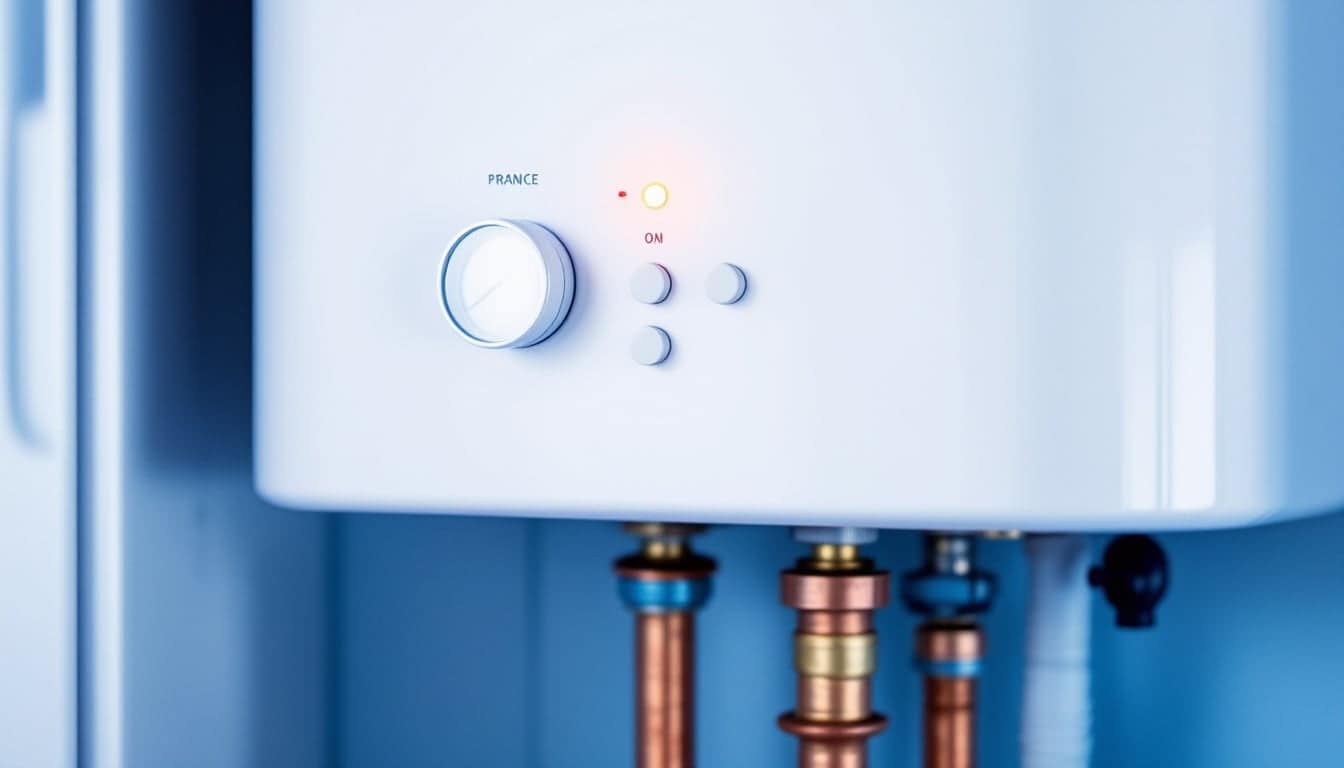
Low pressure doesn't stop gas burning as such, but it stops the boiler trying, and plenty of people describe that as "won't light". With the system cold, most combis should read somewhere around 1 to 1.5 bar; your manual gives the exact figure and the minimum. If it's low, top up through the filling loop. If it keeps dropping, water is leaving the system somewhere, and the guide to a combi boiler losing pressure covers how to trace it.
Check 5: Reset once
Find the reset button or symbol; the manual shows where. Press it once and wait for the whole sequence to run: fan, clicks, then either the soft roar of the burner or another lockout. This can take a minute or two.
- It lights and keeps running: note the date and the fault code you saw. If it happens again within days or weeks, book an engineer anyway, because something caused it.
- It locks out again: stop. Don't press it a second time.
Repeated resets send more gas into a chamber that has already failed to light it, and they hide the pattern an engineer needs to see. Some boilers move into a harder lockout after several resets, which only an engineer can clear.
Check 6: What can you see and hear without opening anything?
Go outside and look at the flue terminal. Snow, a bird's nest, drifts of leaves or a carelessly placed bin bag can block it, and so can new trellis, climbing plants or a shed built hard against the wall. Don't poke anything into a flue, but tell the engineer what you saw.
Then listen during a restart and note exactly what happens: no fan at all, a fan but no clicks, clicks but no flame, or a flame that lights and then drops out. Each one points somewhere different.
Some signs are more urgent than a simple failure to light: soot or brown staining on or around the boiler, a yellow or orange flame through the viewing window of an older appliance, heavier condensation on the windows when the boiler runs, or a carbon monoxide alarm. Switch the boiler off, ventilate the room and get an engineer out promptly.
What the fault code means, in general terms
Fault codes are specific to each manufacturer, and sometimes to each model, so a code from one boiler means nothing on another. The manual, or a label inside the boiler's lower flap, lists them. Broadly, they fall into families:
- Ignition failure: no flame detected during start-up.
- Flame loss: the burner lit, then went out.
- Low water pressure, or a fault in the pressure sensor.
- Overheat: the water got too hot, often because it wasn't circulating well.
- Fan, flue or air pressure faults.
- Condensate blockage, on condensing boilers.
- Sensor or electronics faults, including lost communication with the controls.
Write down the exact code, the date and what you did. The code tells an engineer which family to start with. It rarely names the part that has actually failed.
What not to do
- Don't take off the casing or any panel. Most modern boilers are room-sealed, meaning the combustion side is sealed off from the room, and a disturbed seal can let fumes out.
- Don't keep pressing reset.
- Don't tap, bang or adjust anything near the gas valve.
- Don't try to light a burner by hand, and never use a flame to look for a leak.
- Don't block, wrap or cover the flue, the air intake or the open end of the condensate pipe.
- Don't let a handy friend or neighbour "have a quick look inside".
- Don't ignore a carbon monoxide alarm, soot or an odd smell just because the boiler seems to work.
When to call a registered gas engineer
Book one if the boiler locks out again after a single reset, if the same fault returns within days, if you hear clicking without a flame or a flame that keeps dropping out, or if anything you've seen points inside the casing. Water dripping from the boiler itself, burning smells and soot belong on that list too.
Anyone who works on a gas appliance must be qualified and registered under the scheme that applies in your country, and the rules differ from place to place. The guide to choosing a plumber or heating engineer explains how to check a registration properly.
When you call, have this ready: the make and model from the data plate, the exact fault code, the pressure reading, whether your other gas appliances work, whether it was freezing outside, and what happened when you reset it. That short list often saves an engineer a good part of the visit, and saves you paying for the guesswork.
Work it out Water pressure converter

Selin Aydemir
Selin writes about central heating: combi boilers, radiators, underfloor loops and the small habits that keep a sealed system running quietly. She likes explaining why a fault happens before saying what to do about it.
General guidance only. Gas, electrical and structural work must be done by a suitably qualified person, and rules differ from country to country.