Sump pump failure has terrible timing. The pump sits quietly for weeks, and the night it has real work to do, in a downpour or a fast snowmelt, is the night it stops. Luckily, pumps rarely fail without warning, and a five-minute test with a bucket of water tells you a lot.
This checklist covers that test, the faults behind a failed one, and what repair or replacement involves. There are no dollar figures, because they swing too much by area; you'll get what moves the price and how long the work takes.
Some links earn us a commission.
What is a sump pump?
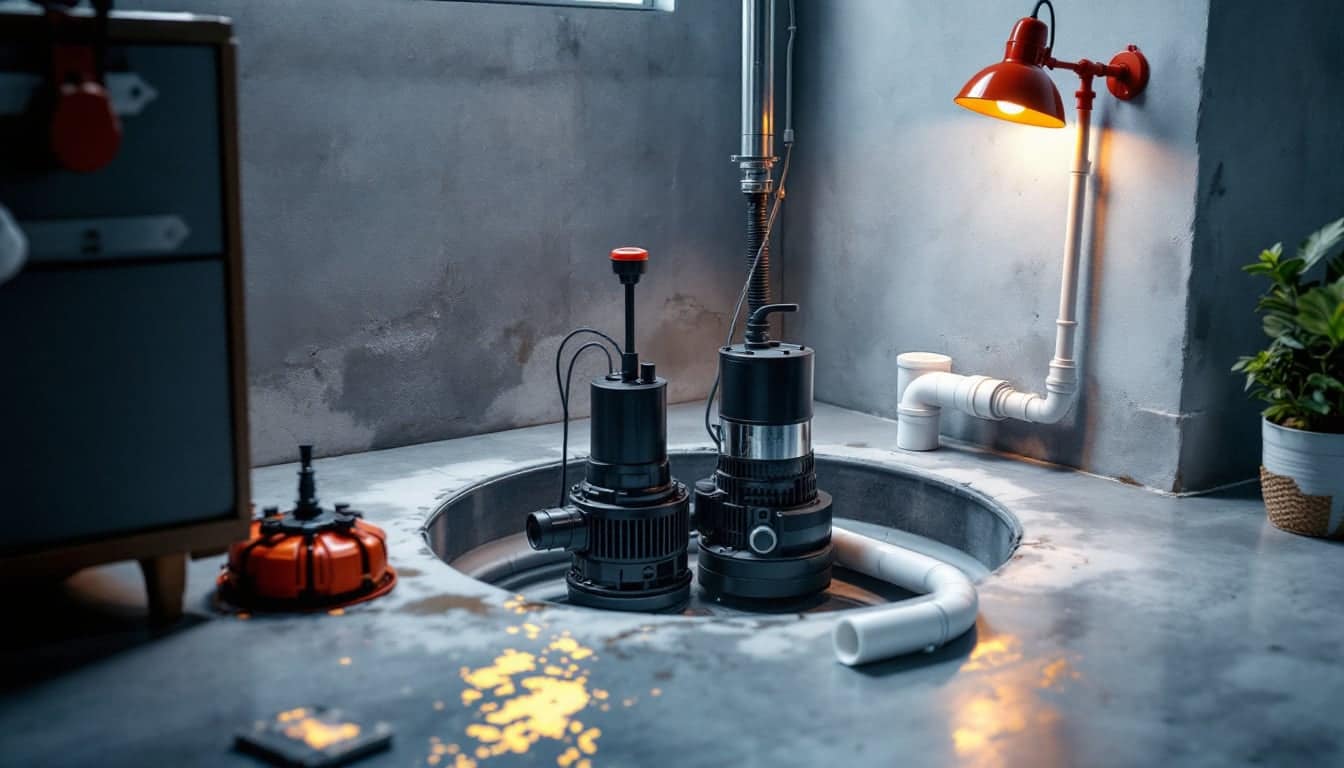
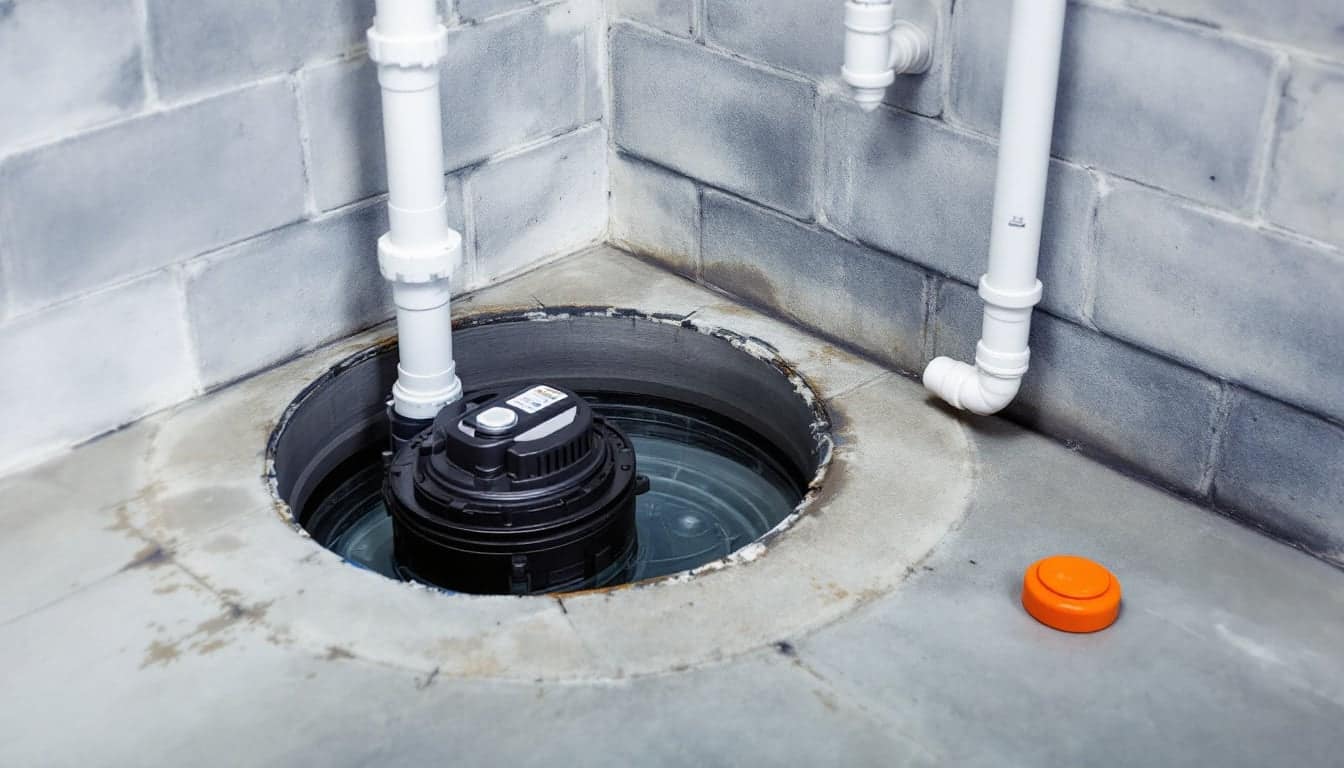
A sump pump sits in a pit, called the sump or basin, set into the lowest part of a basement or crawlspace floor. Drain tile around the foundation carries groundwater into the pit. When the water rises, a float switch turns the pump on, and the pump pushes the water up a discharge pipe and out of the house, away from the foundation. A check valve on that pipe stops the water in it from running back into the pit when the pump stops.
Most homes have a submersible pump, which sits in the water at the bottom of the pit. Older houses sometimes have a pedestal pump, with the motor on a column above the pit. Submersibles are quieter; pedestals are easier to reach and service.
Warning signs your sump pump is failing
Go down and look at the pit every few weeks, and more often in the wet season. These are the signs to act on:
- It runs and runs. The pump keeps going long after the pit should be empty, or even in dry weather.
- It cycles on and off rapidly, every few seconds or minutes, even in light rain.
- It doesn't start when the water is clearly above the level where it normally kicks in.
- New noises. Grinding or rattling from the pit, or a loud bang from the check valve each time it stops.
- Visible wear. Rust on a cast-iron body, a cracked housing, a cord with damaged insulation.
- Damp where it shouldn't be. A tide mark on the wall, a musty smell, or water around the pit after rain.
- Age. If nobody knows when the pump was fitted, treat it as old.
Not all basement damp comes from the sump. A plumbing leak can look similar; our guide to the signs of a hidden water leak helps you tell them apart.
How to test a sump pump with a bucket of water
Do this at least twice a year, before the spring thaw and before the autumn rains. Our home plumbing maintenance calendar has a slot for it.
- Check the pump is plugged into its own outlet, not an extension cord, and that the outlet has power.
- Take the lid off the pit and look at the float. It should move freely, clear of the pit wall, the power cord and the discharge pipe.
- Slowly pour a 5-gallon (about 19-litre) bucket of water into the pit. Watch the water level and the float as it rises.
- The pump should start once the float lifts, without a hesitation or a hum before the motor catches.
- It should lower the water steadily and switch itself off once the float drops. If the pit is wide, you may need a second bucket to trigger it.
- Go outside and check that water is coming out of the discharge pipe, and that it's running away from the house.
- Listen as the pump stops. A short thud from the check valve is normal. Water flowing back into the pit isn't.
Passed? Put the lid back and note the date. Failed a step? The next section narrows down why.
Float switch problems and other faults
It never starts
Check the simple things first: the breaker, a tripped GFCI outlet, a plug that has worked loose. Then look at the float. A tethered float can catch on the pit wall or the power cord and stay down. A vertical float can stick on its rod when sludge builds up. Freeing it often fixes the problem, at least for now. If the float moves freely and the pump still won't run when you lift it by hand, the switch or the motor has failed.
It runs nonstop
The float may be stuck up, or the switch has failed closed. Check the outside end of the discharge pipe too: if it's frozen or blocked, no water moves. Freezing discharge lines are a common winter problem, and the advice in protecting pipes from freezing applies to them too. A worn impeller is another possibility. It turns but moves less water, so the pump never catches up. And in some homes a high water table simply keeps the pump busy all season.
It cycles on and off rapidly
A failed check valve lets the water in the discharge pipe fall back into the pit, which refills it and starts the pump again. A float set with too narrow a range does the same. So does a pit that's too small for the pump. Short cycling heats the motor and shortens its life, so don't leave it.
Air lock
A submersible pump can trap air and run without moving water. A small weep hole in the discharge pipe, between the pump and the check valve, prevents this. If sludge blocks it, clear it with a piece of wire.
Sump pump battery backup
A battery backup is a second, smaller pump that sits in the same pit, slightly above the main one, with its own float. It runs from a deep-cycle battery on a charger, and it takes over when the main pump fails or the power goes out, which is often exactly when a storm is at its worst. Most controllers sound an alarm when the backup runs or the battery is low.
Things to know before you add one:
- The battery runs the pump for a limited time, depending on how often it cycles; the manual gives a figure.
- Batteries wear out. Replace them on schedule, and test the backup with the main pump unplugged.
- The pit must be wide enough for two pumps and two floats that don't foul each other.
Water-powered backups use city water pressure to pull water from the pit with no battery. They use a fair amount of city water, need good mains pressure and usually a backflow preventer under local code. They're no use on a private well, since the well pump stops in a power cut too.
Repair or replace the pump?
Repair makes sense when the fault is the float, a sticking switch, a blocked weep hole, a frozen discharge line or a failed check valve. Those fixes are usually quick.
Replace when the motor hums but won't pump, the housing is cracked or badly rusted, the pump runs but barely moves water, or it's old enough that you'd be repairing it again next season. Many people replace a pump of unknown age on principle before it fails rather than after.
When you replace it, match the pump to the job. A 1/3 HP submersible handles a typical basement. A higher lift or a high water table may need more, and an oversized pump short cycles in a small pit. A vertical float suits narrow pits, where a tethered float has no room to swing.
Sump pump replacement cost: what moves the price
- The pump. Motor size, cast iron or thermoplastic body, and switch type.
- What's reused. If the discharge pipe and check valve are sound, a swap is quick. New pipework and a new check valve add parts and time.
- Access. A pit in an open utility area is easy. One under stairs, behind finished walls or in a tight crawlspace takes longer.
- Battery backup. A second pump, battery, charger and extra pipework.
- Electrical work. A dedicated outlet or a new circuit is a job for a licensed electrician. Whether that outlet must be GFCI protected depends on your local code, so if a GFCI keeps tripping, have an electrician look instead of swapping it for a plain outlet.
- Discharge rules. Many towns forbid sending sump water into the sanitary sewer. If yours drains that way now, rerouting it adds work.
Typical labour: about 1 to 2 hours for a like-for-like submersible swap with the existing pipe, 2 to 4 hours with a new check valve and discharge pipework, and another 1 to 3 hours to add a battery backup. A new pit, which means cutting the concrete floor and connecting drain tile, is a different scale of project and often goes to a waterproofing contractor.
What a plumber checks on a visit
A thorough visit should cover more than the pump:
- The float's range and freedom of movement.
- The check valve, and whether water runs back when the pump stops.
- The weep hole and the discharge pipe, inside and out, and where the water ends up.
- The pit: sludge, gravel, and whether the drain tile inlets are clear.
- The outlet and cord, and whether the pump has its own circuit.
- Pump capacity against the lift from the pit floor to where the pipe exits.
A leak alarm and a home warranty
A battery water leak alarm on the floor beside the pit is the low-cost last line of defence: it sounds as soon as water reaches it, whether the pump has failed or the pit is overflowing. Put another beside the water heater while you're at it. Our water leak detection guides cover other places worth watching.
If you're weighing a home warranty plan, check how it treats sump pumps. Coverage varies by plan: some include the primary pump in the standard contract, others only as an optional add-on, and battery backups, pits, discharge lines and water damage are commonly excluded. There's usually a service fee per claim, and some states are excluded altogether. Read the exclusions before you rely on it.
Tools for this job Toolbox: Laundry and basement

Cedric Adebayo
Cedric looks after the seasonal side of a home, from winter-proofing pipes to hard water and maintenance calendars. He also covers the practical business of hiring a tradesperson you can trust.
General guidance only. Gas, electrical and structural work must be done by a suitably qualified person, and rules differ from country to country.