A pipe wrench is the tool everyone pictures in a plumber's hand, and it's the one homeowners misuse most. Its jaws are toothed and built to bite into round steel pipe. Put it on a chrome nut and it chews the nut to bits. Under a typical modern sink there's very little it's actually for.
Some tool links earn us a commission. As an Amazon Associate I earn from qualifying purchases.
What you'll need
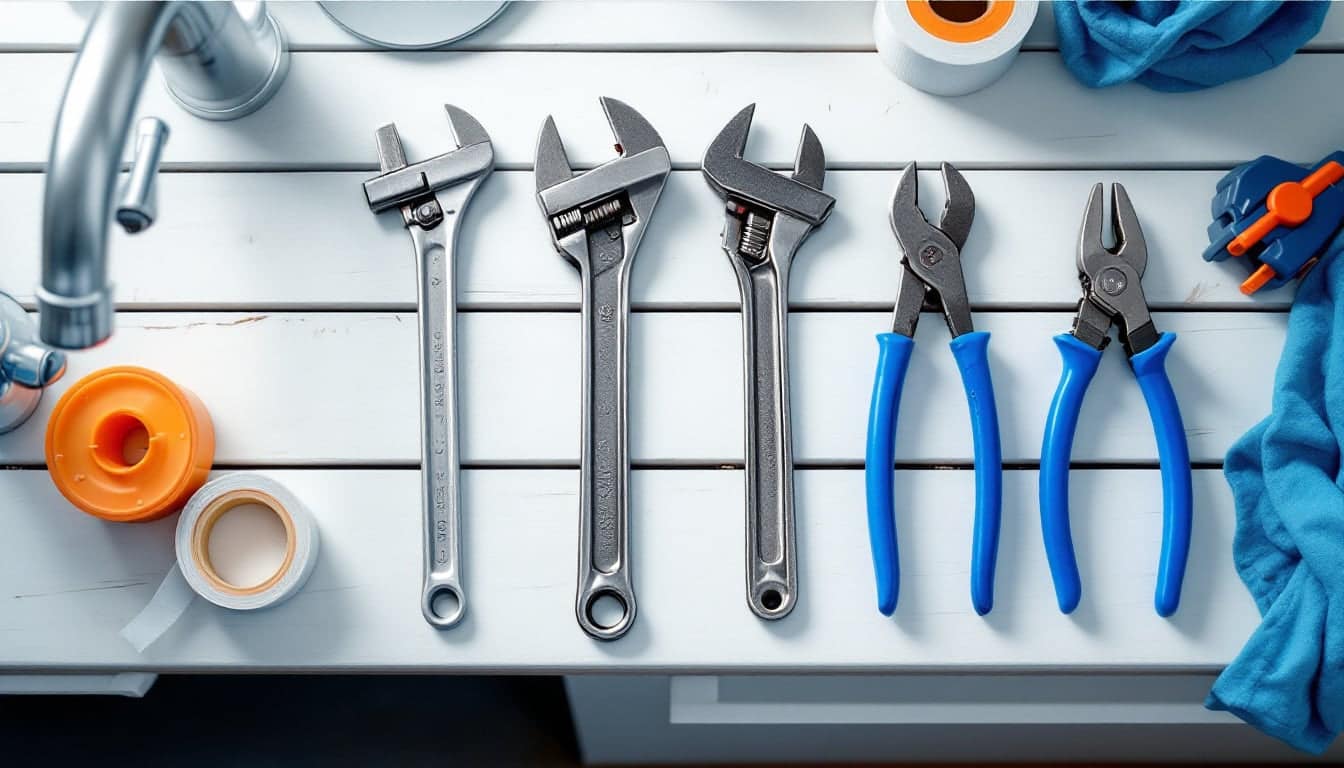
- 14-inch aluminium pipe wrenchMedium
- 11-inch basin wrenchMedium
- 8-inch adjustable wrenchEasy
- 10-inch tongue-and-groove pliersEasy
- Faucet and sink installation wrenchMedium
- PTFE thread seal tape, 1/2 inch (4 rolls)Easy
 Medium14-inch aluminium pipe wrench
A lighter aluminium-bodied pipe wrench for gripping round pipe and stubborn threaded fittings.
$64.99 Amazon price, 22 October 2026, 04:34 UTC
Buy on Amazon- Medium11-inch basin wrench
A long-reach wrench with a pivoting jaw for tap nuts hidden behind a sink basin.
Buy on Amazon - MediumFaucet and sink installation wrench
A multi-socket tool for faucet mounting nuts and supply connections in tight spaces under a sink.
Buy on Amazon
Product prices and availability are accurate as of the date/time indicated and are subject to change.
Picked from specifications and published reviews, not tested by us.
Most household jobs want a basin wrench, an adjustable wrench or a pair of tongue-and-groove pliers instead. Knowing which one saves a lot of scarred fittings and skinned knuckles.
Four tools, four kinds of grip
| Tool | Jaws | Best for | Keep it off |
|---|---|---|---|
| Pipe wrench | Toothed, self-tightening | Threaded steel pipe, big stuck fittings | Chrome, brass nuts, copper, plastic |
| Basin wrench | Toothed, pivoting, on a long shaft | Faucet nuts hidden up behind a sink | Anything you can reach normally |
| Adjustable wrench | Smooth and parallel | Hex nuts: supply connectors, compression nuts, shower arms | Round pipe |
| Tongue-and-groove pliers | Toothed, several jaw positions | Big slip nuts, traps, drain parts, odd shapes | Small chrome nuts, unpadded |
The pattern is simple. Teeth for round things you don't mind marking. Smooth jaws for nuts. Long reach for the places hands can't go.
The pipe wrench
A pipe wrench has two jaws. The heel jaw is fixed to the handle. The hook jaw on top moves up and down on a knurled adjusting nut, and it rocks slightly in its frame. That little bit of play is the clever part. When you pull the handle, the jaws pinch together, so the harder you pull, the harder it bites. Ease off and it slips back round for the next bite, like a crude ratchet.
It only works one way. The open side of the jaw faces the direction you're turning.
Pipe wrench sizes
Pipe wrenches are sized by overall length. Longer means more turning force and a wider jaw.
| Size | Rough jaw capacity | Where it earns its keep |
|---|---|---|
| 10 inch (250 mm) | About 1-1/2 inches (38 mm) | 1/2 and 3/4 inch pipe in tight spaces |
| 14 inch (350 mm) | About 2 inches (50 mm) | The all-rounder for household pipe and fittings |
| 18 inch (450 mm) | About 2-1/2 inches (63 mm) | Larger fittings, stubborn joints |
| 24 inch (600 mm) | About 3 inches (75 mm) | Main lines and heavy work; overkill indoors |
Capacity varies between makers and is usually stamped on the handle. For a house, one 14-inch wrench covers nearly everything, with an adjustable wrench or a second pipe wrench to hold the other side.
Aluminium vs cast iron
The jaws are hardened steel either way. The difference is the handle. Cast iron (often ductile iron) is heavy, tough and shrugs off abuse. Aluminium is much lighter, which you notice the moment you hold one above your head or at arm's length under a cabinet. It costs more, and an aluminium handle can bend if someone slips a length of pipe over it to get more pull.
For occasional home use, either is fine. If you'll be working at awkward angles, a 14-inch aluminium pipe wrench is the easier one to live with.
Adjustable pipe wrench, or monkey wrench?
Every standard pipe wrench is adjustable; that's what the knurled nut is for. "Adjustable pipe wrench" in a shop usually just means the ordinary straight pattern, though offset and end-pattern versions exist for pipes that run close to a wall.
A monkey wrench is something else: an old style of adjustable wrench with smooth jaws, made for square and hex nuts. People use the two names loosely, which is how a lot of nuts get chewed. Monkey wrench vs pipe wrench comes down to this: smooth jaws for nuts, teeth for pipe.
Using a pipe wrench without wrecking things
- Use two. One wrench holds the fitting, the other turns the pipe. Otherwise you twist the whole run and loosen, or crack, a joint further back.
- Leave a gap. Adjust so the teeth bite with a little space between the pipe and the back of the hook jaw. Jammed into the throat, it can't tighten.
- Pull, don't push. If it slips, your knuckles travel away from the wall, not into it.
- Expect marks. The teeth scar the surface. Fine on old galvanised pipe you're replacing. Not fine on anything anyone will see.
- No cheater bars. A length of pipe over a handle that wasn't built for it ends with a bent wrench or a split fitting.
The basin wrench
A basin wrench is a long shaft with a sliding T-bar at the bottom and a spring-loaded, toothed jaw at the top. The jaw pivots over to work in either direction, and like a pipe wrench it grips harder as you turn. Some have telescoping shafts for deep sinks.
It exists for one awkward spot. The nuts that hold a faucet to the sink, and the coupling nuts where supply lines meet the faucet, sit up behind the bowl where no ordinary wrench can swing. The basin wrench reaches up vertically, hooks the nut, and lets you turn it from below.
Plenty of newer faucets use a plastic wing nut you can turn by hand, or a single long threaded rod with a nut you drive with a socket. For those, a multi-socket faucet installation tool is often handier.
Toolbox
- Medium14-inch aluminium pipe wrench
A lighter aluminium-bodied pipe wrench for gripping round pipe and stubborn threaded fittings.
$64.99 Amazon price, 22 October 2026, 04:34 UTC
Buy on Amazon - Medium11-inch basin wrench
A long-reach wrench with a pivoting jaw for tap nuts hidden behind a sink basin.
Buy on Amazon - MediumFaucet and sink installation wrench
A multi-socket tool for faucet mounting nuts and supply connections in tight spaces under a sink.
Buy on Amazon
Product prices and availability are accurate as of the date/time indicated and are subject to change.
Picked from specifications and published reviews, not tested by us.
How to use a basin wrench
- Shut off the water at the supply valves under the sink, then open the faucet to let the pressure go.
- Empty the cabinet and lie on your back with a folded towel under your shoulders. A headlamp beats a torch held in your teeth.
- Find the nut. The mounting nut holds the faucet to the sink. The coupling nut joins a supply line to the faucet's tail. Know which one you're after.
- Set the jaw direction. Looking up from underneath, a standard thread loosens anticlockwise. Flip the jaw so it closes onto the nut when you turn that way. If it slides round instead of biting, flip it. Looking down from above, everything is reversed, which is why basin wrench instructions so often seem to contradict each other.
- Hook the nut with the shaft standing straight up and the T-bar at a comfortable height. Slide the bar to one side so you get a longer pull.
- Turn in short arcs. When the nut breaks free it suddenly gets easy. Finish by hand.
- If it's corroded solid, spray penetrating oil on the threads, wait 15 minutes and try again. Don't hit the wrench with a hammer; the sink is closer than you think.
- To tighten a new faucet, flip the jaw back, run the nut up snug, then add about a quarter turn. Plastic nuts need less.
An 11-inch basin wrench reaches up behind most kitchen and bathroom sinks.
The adjustable wrench
Smooth, parallel jaws with a worm screw to set the gap. This is the one for hex nuts: compression nuts on shut-off valves, braided supply connectors, shower arms and shower head nuts. An 8-inch size handles most household nuts.
Close the jaws snug before you turn, because a loose fit rounds the corners. Turn so the force goes onto the fixed jaw, not the moving one. On a compression fitting, use two: one holds the valve body still, the other turns the nut. The same two-wrench habit protects the basin during a leaking faucet repair.
Wrap chrome before you grip it. Two layers of masking tape on the jaws, or a folded cloth over the nut, keeps scratches off a finish you can't polish back.
Tongue-and-groove pliers
Also called groove-joint or water pump pliers. The lower jaw slides into one of several grooves, so the pliers open wide while the jaws stay roughly parallel. The handles are long, which gives plenty of squeeze.
They grip round and odd-shaped things that wrenches can't: big plastic slip nuts on traps, drain tailpieces, the large nut under a kitchen strainer, a shower head that won't shift by hand. A 10-inch pair opens wide enough for the 1-1/2 inch nuts on most sink traps. When you pull a trap to get past a clog, as in the drain snake guide, these are the tool. Go gently on plastic. The teeth crush thin nuts and crack old ones, and the blocked drains guides start from the assumption that your trap is still in one piece.
Which tool for which job
- Faucet mounting nut behind the sink: basin wrench.
- Supply line nut on the faucet tail: basin wrench, or a faucet installation tool.
- Compression nut at a shut-off valve: two adjustable wrenches.
- Trap and drain slip nuts: hands first, then tongue-and-groove pliers.
- Shower arm or shower head nut: adjustable wrench over a cloth.
- Threaded galvanised steel joint: two pipe wrenches.
- Copper or plastic pipe: none of them as a grip. These are cut and jointed, not wrenched.
- Gas pipe: nothing in this article. That's a licensed gas fitter's job, and rules vary by state.
A small plumbing tool kit
You don't need a van's worth of tools to handle the everyday stuff. A small kit covers dripping connections, trap clean-outs and supply line swaps.
Toolbox
 Easy8-inch adjustable wrench
A mid-size adjustable wrench for supply nuts, shower heads and compression fittings.
$8.99 Amazon price, 22 October 2026, 04:34 UTC
Buy on Amazon Easy10-inch tongue-and-groove pliers
Adjustable slip-joint pliers that grip slip nuts, P-trap couplings and large fittings.
$23.94 Amazon price, 22 October 2026, 04:34 UTC
Buy on Amazon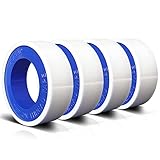 EasyPTFE thread seal tape, 1/2 inch (4 rolls)
White plumber's tape for sealing threaded joints such as shower arms and hose connections.
$4.45 Amazon price, 22 October 2026, 04:34 UTC
Buy on Amazon EasyRubber and silicone washer assortment
An assortment of flat washers for shower heads, hoses and tap connectors.
$13.99 Amazon price, 22 October 2026, 04:34 UTC
Buy on Amazon
Product prices and availability are accurate as of the date/time indicated and are subject to change.
Picked from specifications and published reviews, not tested by us.
Add a basin wrench when you plan to change a faucet, and a 14-inch pipe wrench only if your house has threaded steel pipe. Then the boring essentials: a bucket, old towels, a headlamp, flat and cross-head screwdrivers, rags, and a tub for small parts so the one washer that matters doesn't vanish down the drain.
In a house with modern supply lines, the pipe wrench may never come out of the box. That's fine. It's insurance.
If you're hiring, choosing a plumber covers what to ask before anyone starts.
Tools for this job Toolbox: Hand tools

Owen Pritchard
Owen handles everyday repairs (dripping taps, weak showers, blocked loos) and has firm views on coat hangers, caustic soda and anything sold as "flushable".
General guidance only. Gas, electrical and structural work must be done by a suitably qualified person, and rules differ from country to country.