A shower head that sprays sideways, has a few dead jets and stings like needles is almost always fine underneath. It's clogged with scale, the same chalky calcium deposit you see round the base of the faucet. White vinegar dissolves that scale slowly and cheaply, which is why learning how to clean a shower head with vinegar is one of the most useful ten-minute skills in a hard-water home.
In most cases you don't even need to take the head off. Below are two methods (a no-tools soak and a deeper clean with the head removed), soak times for different finishes, what to do about the little screen hidden in the inlet, when a stronger descaler makes sense and how often to repeat the job.
Some tool links earn us a commission. As an Amazon Associate I earn from qualifying purchases.
Toolbox
 EasyWater hardness test strips
Dip strips that show your water hardness so you can size a softener or set its controls.
$9.98 Amazon price, 19 October 2026, 04:38 UTC
Buy on Amazon EasyInline shower filter
A screw-on shower filter aimed at chlorine and odour; it does not remove the minerals that make water hard.
$36.99 Amazon price, 19 October 2026, 04:38 UTC
Buy on Amazon
Product prices and availability are accurate as of the date/time indicated and are subject to change.
Picked from specifications and published reviews, not tested by us.
What you'll need
Most of this is already in the kitchen drawer:
- Plain white distilled vinegar at the usual 5% acidity. Skip cider, malt and "cleaning vinegar" with added scent, which can leave a smell in the shower for days.
- A gallon-size zip bag or a strong plastic produce bag with no holes.
- A thick rubber band, a zip tie or a twist tie to hold the bag up.
- An old toothbrush and a toothpick or safety pin for single blocked holes.
- A soft cloth for drying and for padding wrench jaws.
- A bowl if you take the head off.
- For removal: an adjustable wrench, PTFE thread tape and possibly a spare rubber washer.
Before you start: a two-minute flow check
If you want to know whether the cleaning made a real difference, measure first. Hold a 1-gallon bucket under the shower at full flow and time how many seconds it takes to fill. Then put that number into the flow rate calculator, or work it out yourself: 60 divided by the seconds gives gallons per minute. A head that fills the bucket in 40 seconds is running at 1.5 gpm (about 5.7 litres a minute). Repeat the test afterwards.
Method 1: the bag-and-band soak (no tools)
This is the method most people need, and it suits fixed heads that are stiff, high up or simply not worth the risk of unscrewing.
- Wipe the face of the head with a damp cloth to clear soap film, so the vinegar reaches the scale.
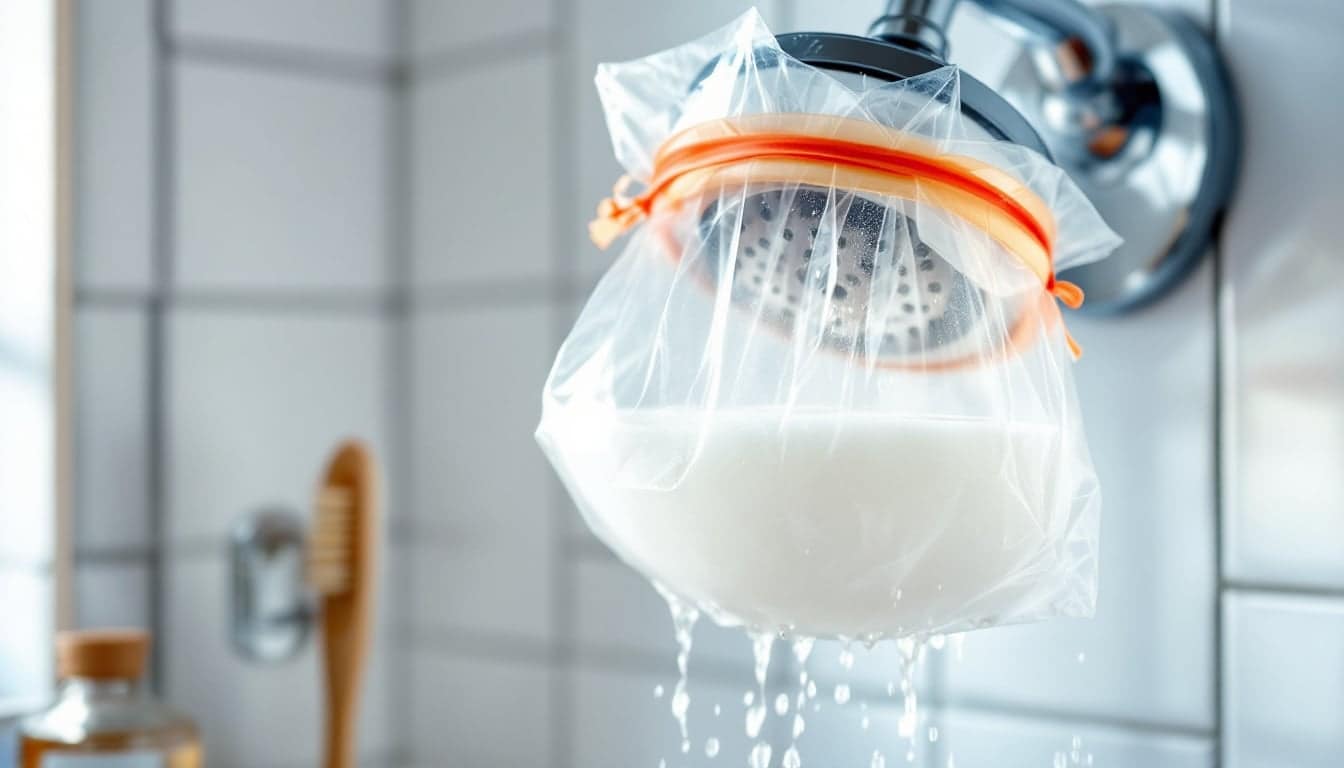
- Pour vinegar into the bag until it's about half full. You want enough to cover the nozzle face completely once the bag is lifted into place.
- Lift the bag up around the head so the face is fully submerged. Slow is better here. A sloshing bag of vinegar at eye height is no one's idea of fun.
- Gather the top of the bag around the shower arm and wrap the rubber band round it several times. Tie it tight enough to carry the weight.
- Leave it to soak for the time in the table below.
- Remove the bag over the tub or tray, pour the vinegar down the drain and run the shower on hot for a minute or two. Loosened scale flushes straight out.
- Rub the rubber nozzles with your thumb while the water runs. Bits of scale pop out of the tips.
- Scrub the face with the toothbrush, then poke any jet that's still blocked with a toothpick.
How long to soak a shower head in vinegar
The right soak time depends on how thick the scale is and, more importantly, on the finish of the head.
| Finish or material | Light scale | Heavy scale | Notes |
|---|---|---|---|
| Polished chrome | 30 minutes to 1 hour | Up to overnight | Rinse well and dry; chrome tolerates vinegar better than most finishes |
| All plastic (white or chrome-look) | 1 hour | Overnight | Chrome-look plastic plating can peel if scrubbed hard |
| Brushed nickel, stainless look | 15 to 30 minutes | Repeat short soaks rather than one long one | Check the maker's care instructions first |
| Matte black, oil-rubbed bronze, gold or brass tones | Check the instructions; many say mild soap only | Take the head off and soak only the inlet and nozzle parts | Acids can dull or blotch coated finishes |
A useful trick for heavy scale: warm the vinegar first. Warm, not hot, in a microwave-safe jug for 30 to 40 seconds. Heat speeds the reaction noticeably. Don't boil it, and keep your face away from the fumes when you pour.
If an overnight soak still leaves hard crust, it's time for the descaler section further down.
Method 2: remove the head for a deeper clean
Removing the head lets you clean the inlet, the screen and the washer, which is where a lot of hidden grit sits. Allow 20 to 30 minutes, plus soaking time.
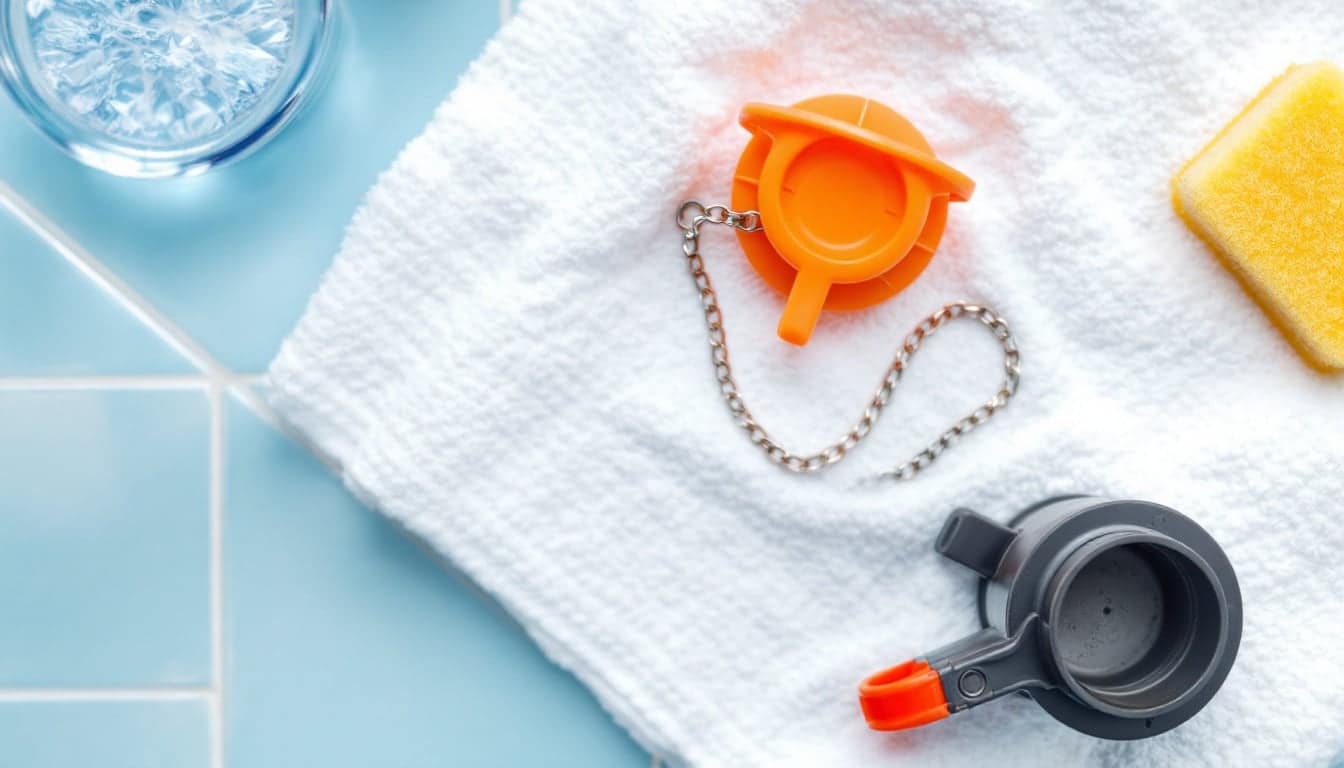
- Turn the shower off and put the plug in the drain or lay a towel over it, so no small parts disappear.
- Try by hand first. Turn the swivel nut at the back of the head anticlockwise (lefty-loosey as you face the wall). Many come off without tools.
- If it's stiff, wrap the nut in a cloth and use an adjustable wrench. Hold the shower arm steady with your other hand so it doesn't twist inside the wall.
- Drop the head into a bowl of vinegar, face down, for the time in the table above.
- Clean the shower arm threads with the toothbrush and a little vinegar while you wait. Pick off old shreds of tape.
- Rinse, scrub and clear the nozzles, then move on to the inlet (below).
- Refit with fresh PTFE tape, wrapped clockwise around the arm threads two or three times. Hand-tight plus a quarter turn with the cloth-wrapped wrench is plenty.
Cleaning the nozzles
Rubber nozzles are easy: flex each one between finger and thumb. Hard plastic or metal plates need more patience. Work along each ring of holes with a toothpick, never a drill bit or anything that can widen the opening, then back-flush by holding the face under the faucet. On heads with a removable face plate (look for a small screw or a twist-off ring), take the plate off and soak it separately. Scale often hides behind it.
The inlet screen and washer
Look into the inlet, where the head screws onto the arm. You'll usually find a flat rubber washer and, behind or inside it, a small mesh screen. That screen catches grit and flakes of scale from the pipes, and a clogged one can halve the flow on its own.
- Prise the washer out gently with a small flat screwdriver or the toothpick.
- Lift out the screen, rinse it under the faucet and brush it clean. Soak it in vinegar if it's crusted.
- If the washer is cracked, flattened or hard, replace it with a matching one from a washer assortment.
- Behind the screen you may see a small plastic disc with a hole in the middle. That's the flow restrictor. Clean around it if it's gritty, but leave it in place.
Using a descaler instead of vinegar
Vinegar is mild. When scale is very thick, or after a second overnight soak has barely touched it, a stronger product saves time. A calcium, lime and rust remover works faster than vinegar, but it's a stronger acid, so it needs more care:
- Read the whole label before opening. Most descalers specify a dilution and a maximum contact time, often only a few minutes, and list surfaces to avoid.
- Keep it off natural stone, such as marble, travertine and limestone, and off coloured grout. Acids etch stone and can bleach grout.
- Be careful with coated finishes. Matte black, bronze, gold-tone and some brushed metals can be marked permanently. Take the head off and soak only what the label allows.
- Wear gloves and open a window. Run the fan.
- Never mix it with bleach or any other cleaner. The same goes for vinegar: acid and bleach together release chlorine gas.
- Rinse thoroughly and run the shower for a couple of minutes before anyone uses it.
What not to do
- Don't add baking soda to the vinegar. The fizz looks impressive, but it's the two neutralising each other, which leaves you with salty water and less acid.
- Don't use bleach on scale. It doesn't dissolve calcium.
- Don't poke nozzles with a drill bit or a large needle. Wider holes mean a permanently uneven spray.
- Don't grip an unpadded shower head with pliers. Teeth marks on chrome don't polish out.
- Don't overtighten when refitting. Plastic nuts crack, and a hard twist can loosen the fitting behind the wall.
How often to clean a shower head
It depends on your water. If you don't know your hardness, a test strip will tell you in a minute.
- Very hard water: a quick thumb rub of the nozzles weekly, and a full vinegar soak every month.
- Moderately hard water: a soak every two to three months.
- Soft water: once or twice a year, mainly to clear the inlet screen.
People sometimes buy a shower filter hoping to skip all this. Most filters target chlorine, not the minerals that cause scale, which is explained in more detail in shower filters and hard water. For the bigger picture, including softeners and protecting appliances, see the guide to hard water and limescale.
FAQ
Can I leave a shower head in vinegar overnight?
A polished chrome or plain plastic head, yes. Coated finishes, no: keep those to short soaks or follow the maker's care guide.
Why is my shower still weak after cleaning it?
Check the inlet screen first, since a bag soak doesn't reach it. If the screen is clean, compare the flow with another faucet. Weak flow everywhere points to the supply, not the head.
Can I clean a handheld shower hose the same way?
Unscrew the hose at both ends and soak the end fittings and their washers in vinegar. Run water through the hose afterwards to flush out loose scale. A hose with a kink or a split cover should be replaced.
Work it out Water softener size calculator

Hannah Leclerc
Hannah writes about bathrooms and kitchens: planning a refit, keeping wastes flowing and asking installers the right questions before the tiles go on.
General guidance only. Gas, electrical and structural work must be done by a suitably qualified person, and rules differ from country to country.