Knowing how to flush a water heater is one of the few hot water jobs most homeowners can do safely themselves. As water heats, some of its dissolved minerals come out of solution. In a tank they settle as a layer of sandy grit on the bottom; in a tankless unit they bake onto the narrow passages of the heat exchanger as hard scale. Flushing removes that material before it shortens the heater's life.
The job needs a garden hose, a bucket, an hour or two and one firm rule: an electric heater must be completely full of water before its power goes back on. Everything else is patience.
Why sediment matters
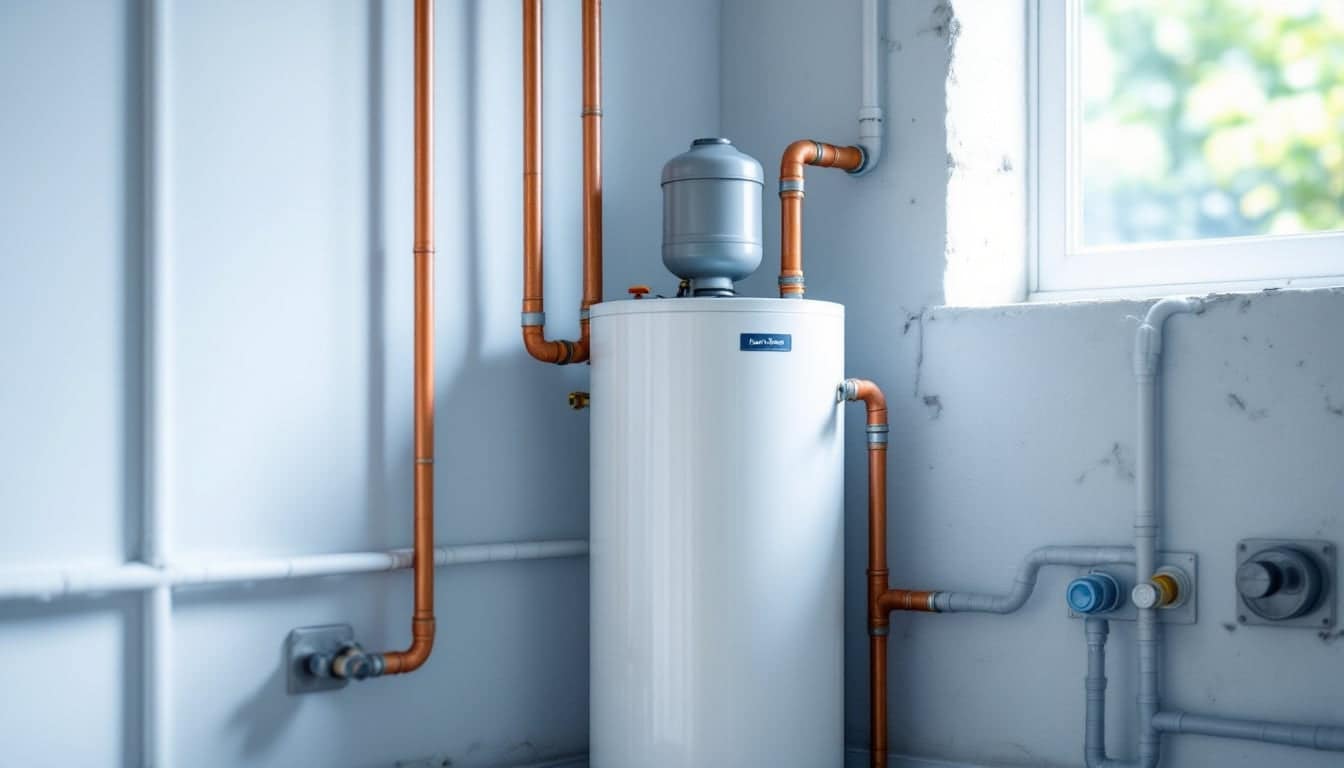
Picture a tank water heater as a tall pan on a stove. In a gas heater the burner sits under the tank floor; put a layer of sediment on that floor and the heat has to pass through the grit before it reaches the water. Water trapped beneath the layer flashes into small steam bubbles that burst through it, and that is the rumbling, popping or kettle-like noise many older heaters make while firing. More of the burner's heat goes into the grit and up the flue, the tank floor runs hotter than it was designed to, and the steel and its glass lining age faster.
Electric tanks suffer differently. The lower element sits a few inches above the floor, and once the sediment reaches it, the element runs hot, scales over and fails sooner. In both types, sediment also works its way into the drain valve, which is why a neglected valve often trickles when you finally open it.
A tankless heater has no tank floor, but its heat exchanger is a coil of small tubes carrying water at high temperature. Scale narrows those tubes, flow drops, the unit's sensors notice the exchanger overheating, and you start seeing error codes, temperature swings in the shower and a heater that struggles in winter.
Before you start
- Scalding. Tank water is commonly kept at about 120 °F (49 °C), sometimes hotter. Either switch the heater off and leave it a few hours to cool, or use up the hot water first with a run of showers and laundry.
- Old, neglected tanks. If the heater is more than about ten years old and has never been flushed, think before you start. Sediment sometimes sits over a weak spot, and plastic drain valves on old tanks can refuse to close again. If the tank is near the end of its life anyway, compare the effort with the guide to water heater replacement cost first.
- Know your shutoffs. Find the cold supply valve on the pipe entering the top of the heater and the main water shutoff for the house, and check both turn.
How to flush a tank water heater
- Turn off the energy. For an electric heater, switch off its breaker at the panel. For a gas heater, turn the gas control knob to "pilot" or "vacation" so the burner cannot fire while the tank is empty. The label on the heater shows which setting your model has.
- Let it cool, if you have not already used up the hot water.
- Close the cold supply valve on top of the heater. A lever valve is closed when the handle sits across the pipe; a round handle turns clockwise.
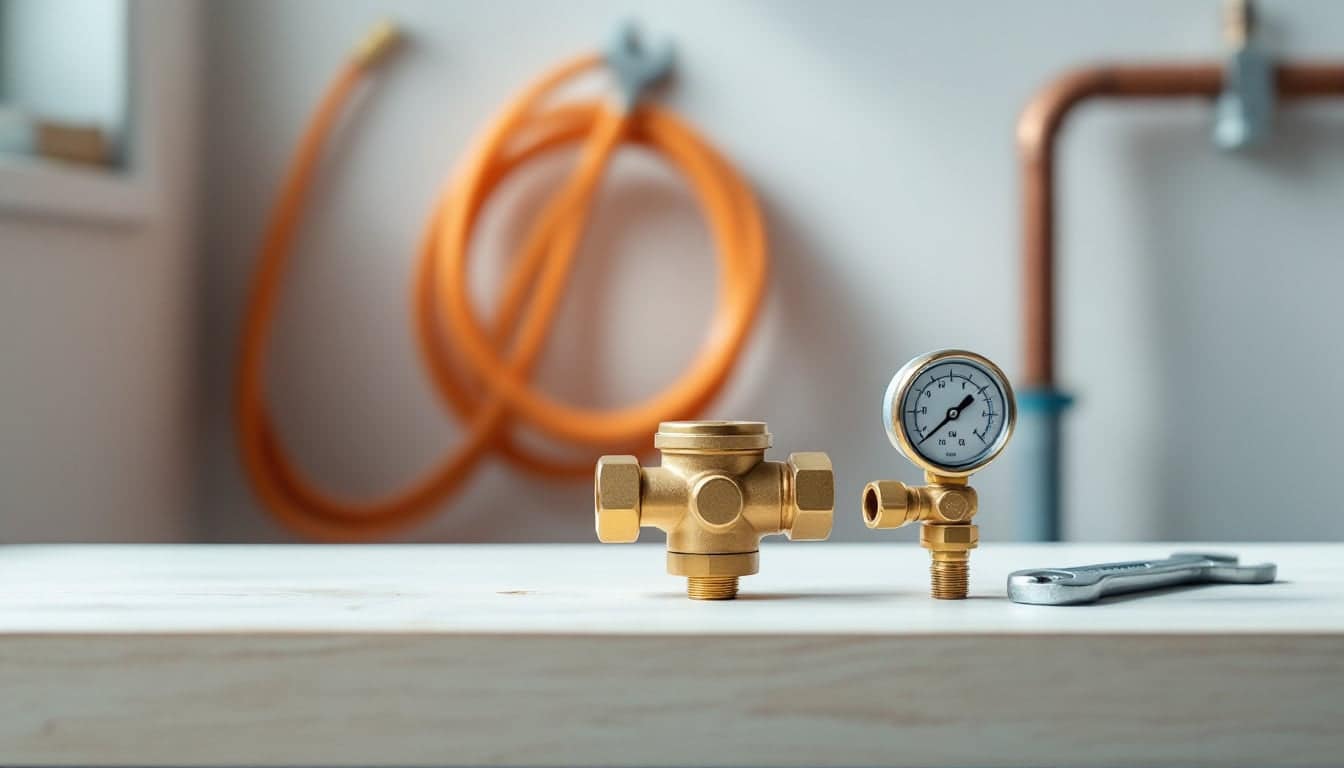
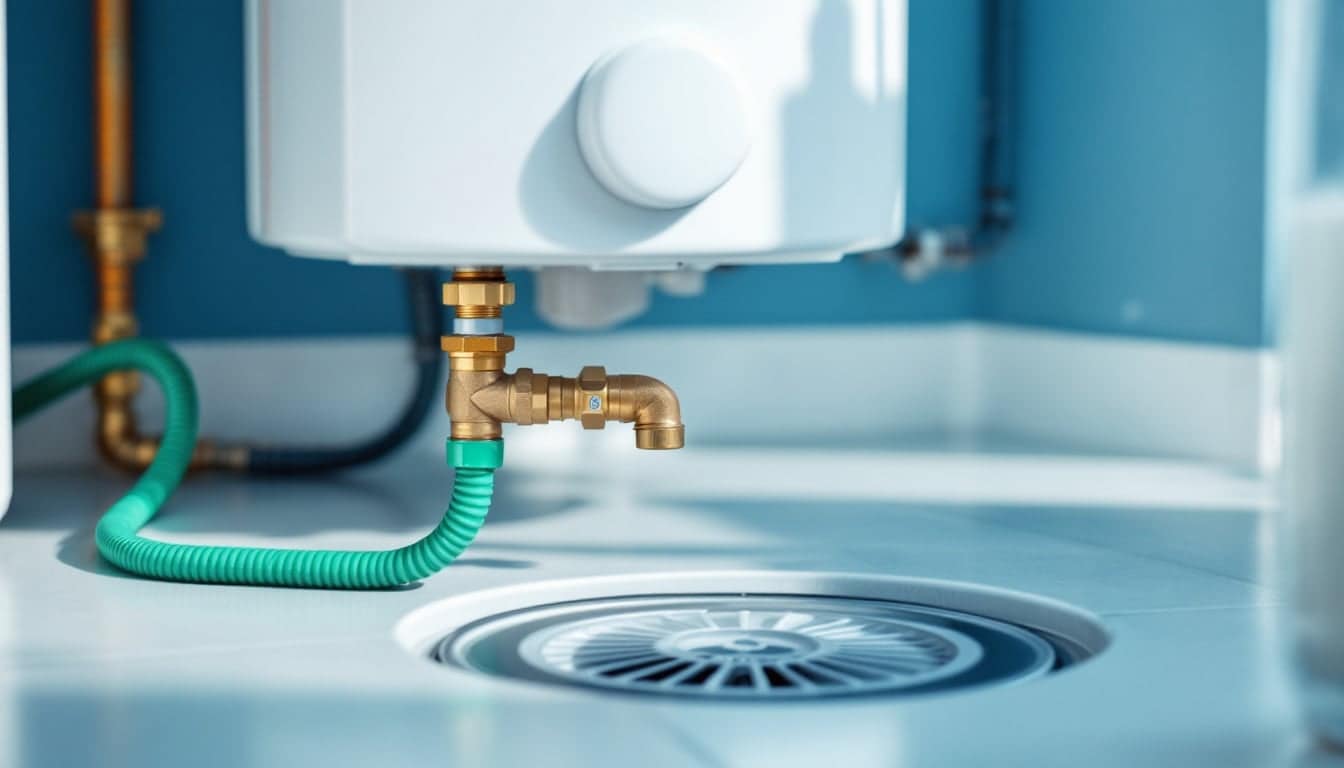
- Connect a garden hose to the drain valve. Hand tight is usually enough; a gentle nip with groove-joint pliers stops a drip at the thread. Run it to a floor drain or outside, keeping the whole hose lower than the valve.
- Open a hot tap somewhere in the house, ideally one close to the heater. This lets air into the top of the tank. Without it, the tank holds its water like a finger over a straw.
- Open the drain valve. Some turn with a handle, some with a flat screwdriver in a slot. Expect cloudy, rusty or gritty water at first.
- Let the tank drain. A 40 or 50 gallon (151 or 189 litre) tank can take 20 minutes or more, longer if the valve is partly clogged.
- Stir up the sediment. With the drain still open, open the cold supply valve for a few seconds, then close it again. The burst of incoming water churns the grit on the floor so it flows out. Repeat several times.
- Flush until clear. Every so often, fill a clear glass jar from the hose outlet. When the water comes out clear with no sand settling in the jar, you are done.
- Close the drain valve and remove the hose. Keep a bucket under the valve for a few minutes and watch for drips.
- Refill completely. Open the cold supply valve fully and leave the hot tap from step 5 open. At first it will spit and cough air. Wait until it runs in a steady stream with no sputtering, then close it. Open the other hot taps in the house briefly to clear their air too.
- Restore the energy. Switch the breaker back on, or return the gas control to its normal setting and relight the pilot if needed, following the instructions printed on the heater. The tank will take an hour or so to come back up to temperature.
Dry firing. Never switch an electric water heater back on until hot water runs from a tap without spitting air. Electric elements are cooled by the water around them. Powered in an empty or half-full tank, an element overheats and can burn out almost at once, and you are left with a cold tank and an element to replace.
How often to flush a water heater
Most makers suggest flushing a tank water heater about once a year, and their manual is the authority for your model. Hard water changes the timetable. Where the water leaves white crust on taps and kettles, every six months is sensible, and the guide on hard water and limescale explains what causes that crust and how to measure your water. Softened water produces much less sediment, though a tank still gathers some rust flakes and debris over time.
A quick mini-flush between full flushes also helps. Every few months, hold a bucket under the drain valve and let a gallon or two (4 to 8 litres) run out at full flow. It takes five minutes and carries away the loose material before it packs down.
Tankless units are usually descaled yearly too, more often in hard water, and many show a scale code when the exchanger needs attention.
How to flush a tankless water heater
A tankless unit is descaled rather than drained: a small pump circulates descaling solution through the heat exchanger, then fresh water rinses it out. It relies on the pair of isolation valves most installers fit under the unit, one on the cold inlet and one on the hot outlet, each with a small capped service port.
- Cut the power and fuel. Unplug the unit or switch off its breaker. On a gas unit, also close the gas valve to the heater.
- Close both isolation valves so the heater is cut off from the house pipework.
- Remove the caps from the two service ports. Open the small purge handle on each very slowly over a bucket, since a little trapped water will come out.
- Connect the flush kit. One hose runs from the pump outlet to the cold-side service port. A second hose runs from the hot-side service port back into the bucket. Set the pump in the bucket.
- Add the descaling solution. Use undiluted white vinegar or a descaler your heater's maker approves, enough to cover the pump intake with room to spare. Kits typically call for a few gallons.
- Open both service ports and start the pump. The solution circulates through the exchanger and back to the bucket. Run it for the time your manual gives, commonly 45 minutes to an hour. It often returns cloudy at first.
- Rinse. Switch off the pump, empty the bucket, and point the hot-side hose into it. Close the cold-side service port, open the cold isolation valve and let fresh water run through the unit for about five minutes.
- Clean the inlet screen. Most units have a small mesh filter where the cold water enters. Unscrew it, rinse the grit off under a tap and refit it.
- Put it back together. Close the service ports, refit the caps, open both isolation valves, and run a hot tap until the air clears. Then restore power and gas.
If your tankless heater has no service valves, a plumber can fit an isolation valve set. After that, descaling becomes a yearly DIY job, and if the scale keeps coming back fast, the comparison of salt-free and salt-based water softeners is the next thing to read.
When the drain valve won't open
- The handle will not turn. Plastic drain valves get brittle with age. Do not clamp pliers on a plastic handle and lean on it; it snaps, and a snapped valve on a full tank is a bad afternoon. A brass valve with a screwdriver slot can take steady pressure.
- It opens, but only trickles. Sediment has plugged the valve. Briefly open the cold supply to push more pressure behind it. If that fails, close the drain, connect a hose from an outdoor tap with a double female hose connector, and open both for a second or two to push the clog back into the tank.
- It drips after closing. Grit is caught on the seat. Open and close it quickly two or three times to flush the grit past. A screw-on garden hose cap stops the drip until the valve is replaced.
- It cracks or leaks steadily. Close the cold supply, catch the water in a bucket and call a plumber. Replacing a drain valve means draining the tank and freeing old threads; a full-port brass ball valve flushes far better than the original.
FAQ
Can I flush a water heater without turning it off?
Not an electric one. The water level drops while it drains and the elements would dry fire. A gas heater should be set to pilot or vacation so the burner is not heating a nearly empty tank.
Will flushing fix a noisy water heater?
Often it quietens the rumbling. On an old tank the bottom layer may have set hard and will not wash out with a hose. If the noise returns within weeks, factor that in when you weigh up repair against replacement.
Do I need a water heater flush kit for a tank heater?
No. A garden hose on the drain valve is all a tank needs. Water heater flush kits, the small pump with two hoses, are made for tankless units with service valves. You will find the rest of the heating maintenance guides in the heating and boiler care section.
Work it out Water heater size calculator

Selin Aydemir
Selin writes about central heating: combi boilers, radiators, underfloor loops and the small habits that keep a sealed system running quietly. She likes explaining why a fault happens before saying what to do about it.
General guidance only. Gas, electrical and structural work must be done by a suitably qualified person, and rules differ from country to country.