A damp patch proves that water is present. It says nothing about where the water came from, and that is what decides who you call and what you spend. In most homes the answer is one of four things: condensation from the air indoors, rising damp from the ground, penetrating damp from rain, or a leak from the plumbing. Each has habits: favourite walls and heights, a season, and a typical response to a wet night or a running bath. Learn those habits and a few cheap tests, and most stains narrow to one or two suspects before anyone is paid to look.
The full list of hidden-leak symptoms, from creeping bills to warm floors, is in signs of a hidden water leak; this guide concentrates on telling the four causes apart.
Start a damp diary first
Damp is a pattern over time; one look on one day misleads.
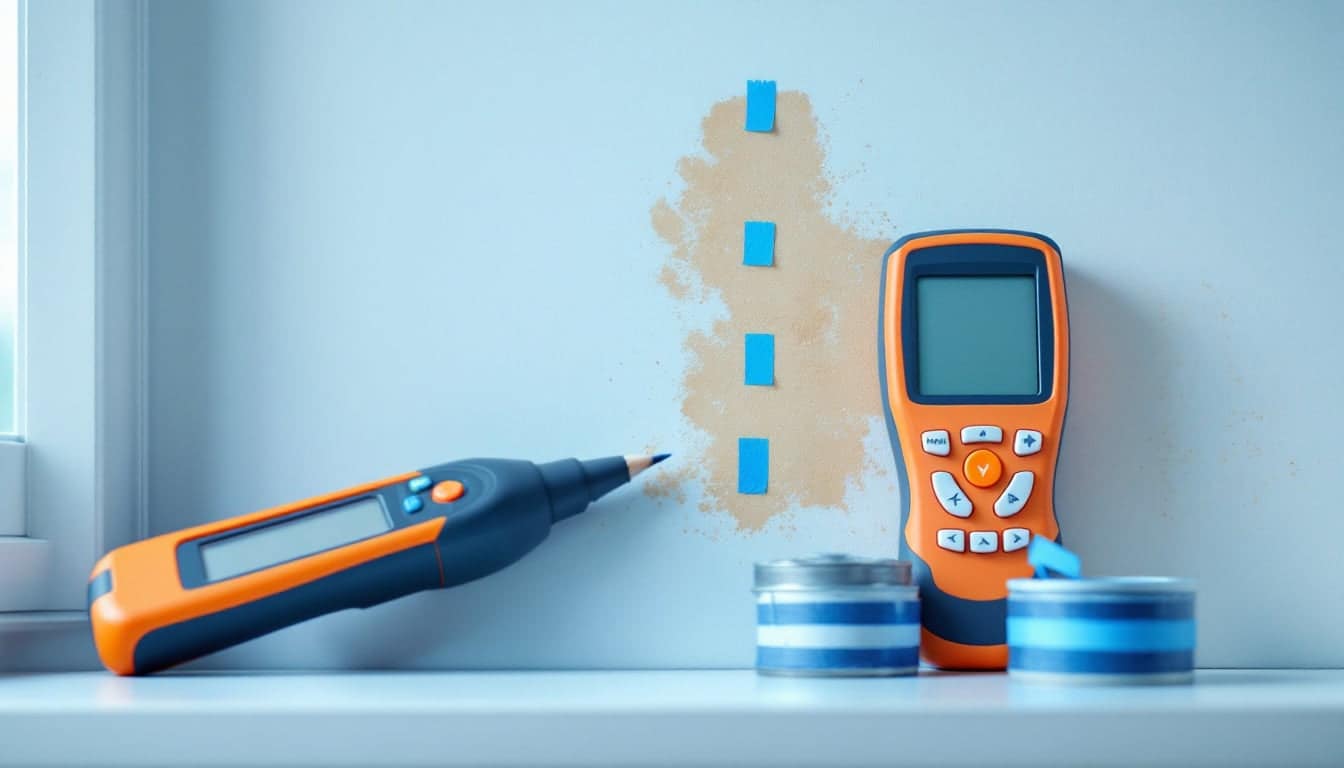
- Draw round the patch lightly in pencil and date it. Photograph it from the same spot each time, with a tape measure in shot.
- Each day, note the weather (dry, light rain, heavy or wind-driven rain), whether the heating ran, and what put water into the air or the pipes nearby: showers, cooking, laundry drying indoors, the washing machine upstairs.
- Keep it up for two to three weeks. If water is actively dripping, skip the diary and turn the water off.
The four suspects
Condensation
Warm air holds more water vapour than cold air, and a household adds a surprising amount of moisture to it every day through breathing, cooking, bathing and drying clothes. When that air meets a surface colder than its dew point, the vapour turns back into water.
So condensation goes for the coldest surfaces: window reveals, corners where two outside walls meet, the strip of ceiling along an external wall, the wall behind a wardrobe where air can't circulate. It favours cool bedrooms, north-facing rooms and bathrooms without a working extractor, and it is worst on cold mornings from late autumn to early spring. The evidence is beads of water, black speckled mould and a musty smell, often in several rooms, with no crisp edge and rarely any salt.
Rising damp
Masonry can draw groundwater upwards through its pores, much as a sugar cube draws up tea. A damp-proof course near the base of the wall should stop it. Rising damp happens when that layer is missing, has failed or has been bridged, for instance by soil or paving built up outside, render carried down over it, or internal plaster run down to the floor.
It only affects ground-floor and basement walls and rarely climbs much more than a metre. The top edge is often a fairly level brownish line with a band of white, fluffy salts beneath, left behind as the groundwater evaporates. It is there all year, with little change from week to week. Many surveyors think true rising damp is diagnosed more often than it occurs, and that bridging is a commoner culprit. Be wary of a diagnosis from anyone who is also selling the cure.
Penetrating damp
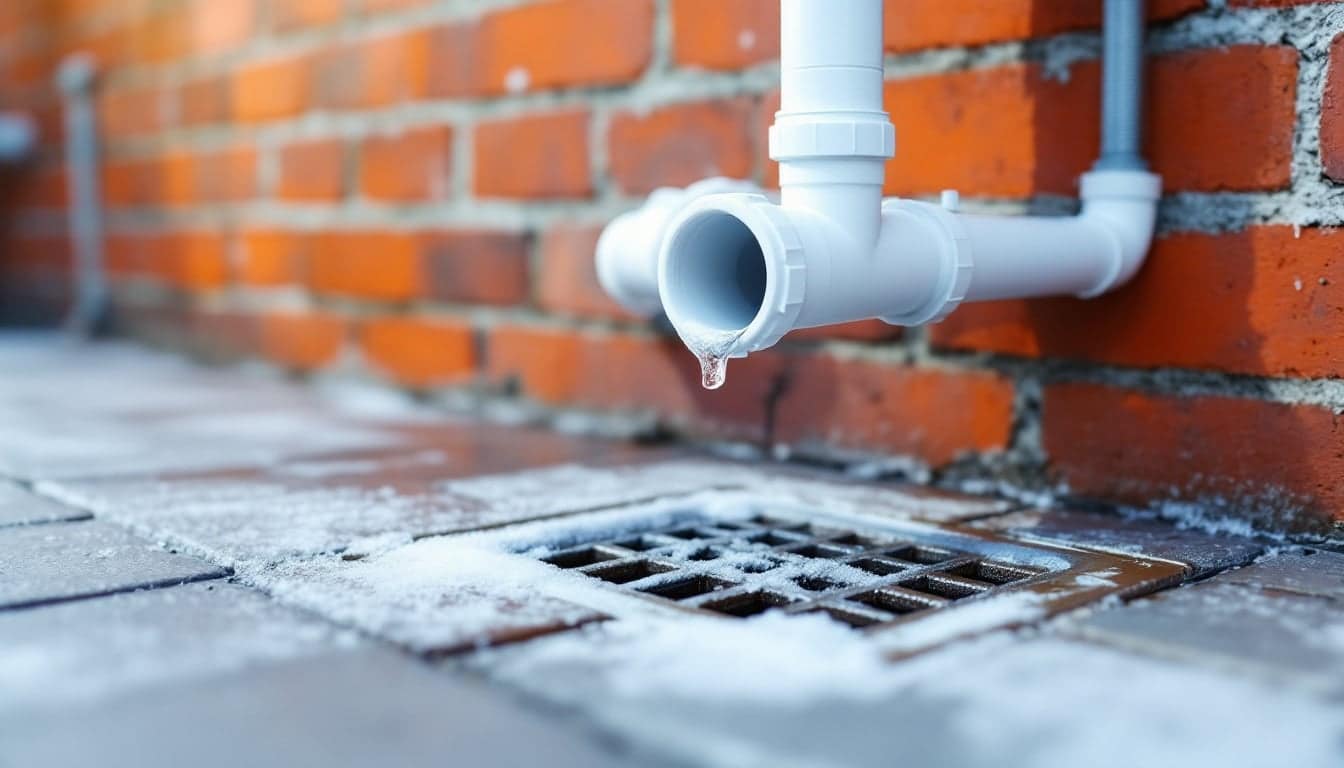
This is rain getting in through the building's skin: overflowing gutters, a leaking downpipe joint, cracked render, eroded mortar, failed sealant round a window, a slipped tile, a defective flashing round a chimney. It can appear at any height, often on the wall facing the prevailing weather, and if you line the patch up from outside there is often a visible defect on the same spot or just above it.
Its signature is a response to weather. It appears or darkens after rain, especially wind-driven rain, then dries back in a dry spell, leaving a tide mark each time. In a thick solid wall the response can lag by several hours or a day or two. Go out in heavy rain with an umbrella and a torch and watch the gutters; an overflowing gutter is easy to miss in dry weather.
Plumbing leaks
A leak follows the pipes, not the weather or the wall temperature. Supply pipes are under pressure and leak constantly. Heating pipes often leave a warm patch and a falling boiler gauge. Waste pipes and the seals round baths and showers leak only when water drains or splashes. Leaks can show at any height on any floor, very often on a ceiling below a bathroom, and their giveaway is behaviour that ignores the weather.
Tests that separate them
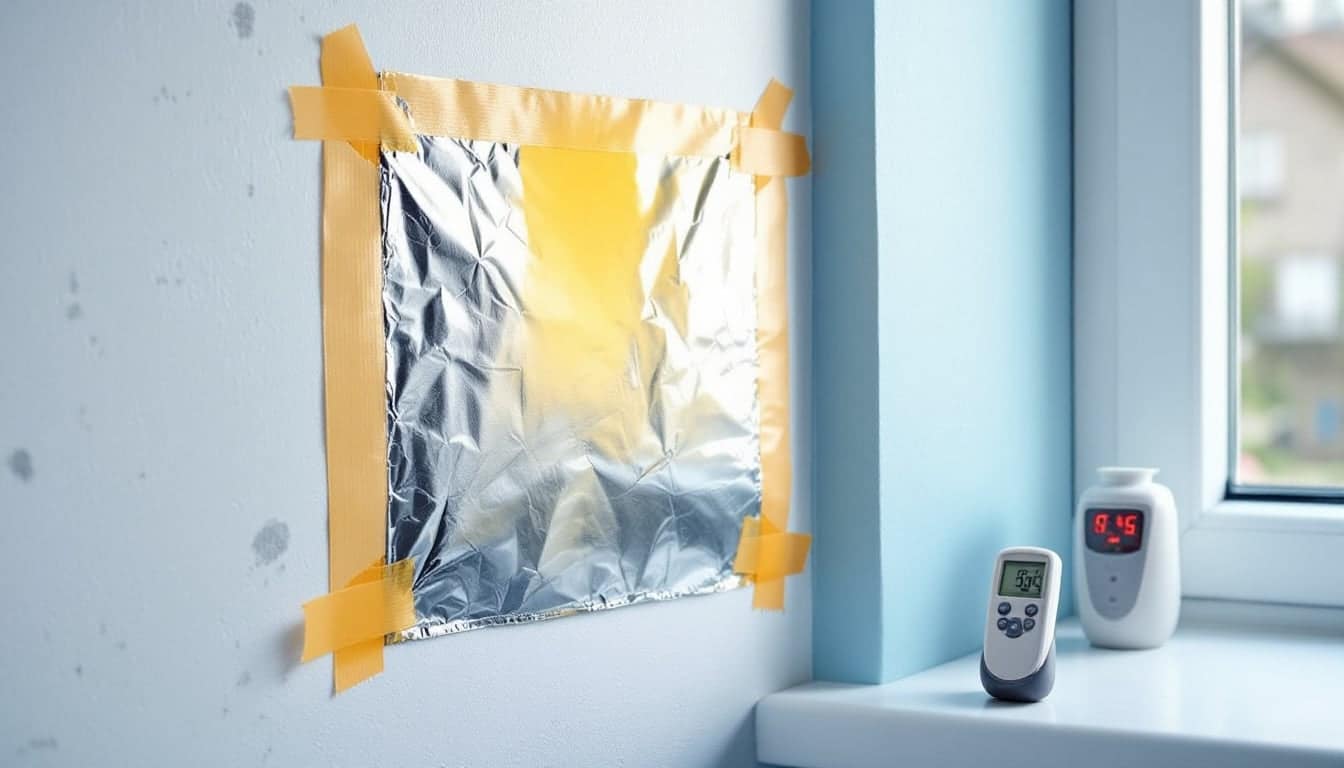
The foil test
This answers one question: is the moisture coming from the room air, or from within the wall?
- Cut a square of kitchen foil about 30 cm across and wipe any beads of water off the wall.
- Tape all four edges down with waterproof tape, so room air can't get behind it.
- Leave it for 24 to 48 hours while the room is used normally.
- Peel it off and check both faces.
Moisture on the room side means condensation. Moisture on the wall side, or darker wall underneath, means water is coming through the wall: rising damp, penetrating damp or a leak. Both sides wet suggests more than one cause. Both dry means the wall wasn't actively wet during the test, so repeat it when the patch is at its worst. The foil can't name the wall-side cause, but ruling condensation in or out often settles the argument.
Moisture meters, and how salts fool them
Most consumer moisture meters are calibrated for timber, so on plaster and brick the number is only relative. Take readings on a grid every 20 to 30 cm, across the patch and out into dry wall, and look at the pattern rather than any one number. Condensation wets only the surface, so readings are often high first thing and much lower by the afternoon.
Salts are the main trap. Meters measure how easily electricity passes through a material, and salts conduct well. Plaster contaminated by old rising damp, an earlier leak or flue gases in a chimney breast can read wet when it is fairly dry. Some salts also pull moisture from humid air, so a wall can genuinely turn damp on muggy days long after the source has gone. Timber skirting gives more trustworthy readings than the plaster above it.
When the answer matters, a surveyor can drill masonry samples for laboratory testing, which measures true moisture content and checks for the chlorides and nitrates typical of ground salts.
Reading tide marks
A tide mark is the brown or yellowish edge left where water evaporated and dropped what it was carrying. It shows where water once reached, not that the area is still wet, which is why the pencil outline matters more than the stain.
- A level band along a ground-floor wall, with white salts below it, points to rising damp or bridging.
- Several rings one inside another mean repeated wetting and drying: rain, or a waste or seal leak.
- A ring on a ceiling directly under a bath, shower or WC points to plumbing or a failed seal.
Rain or taps: the response test
The diary does most of the work here.
- Worse after rain, drying out in dry spells: penetrating damp.
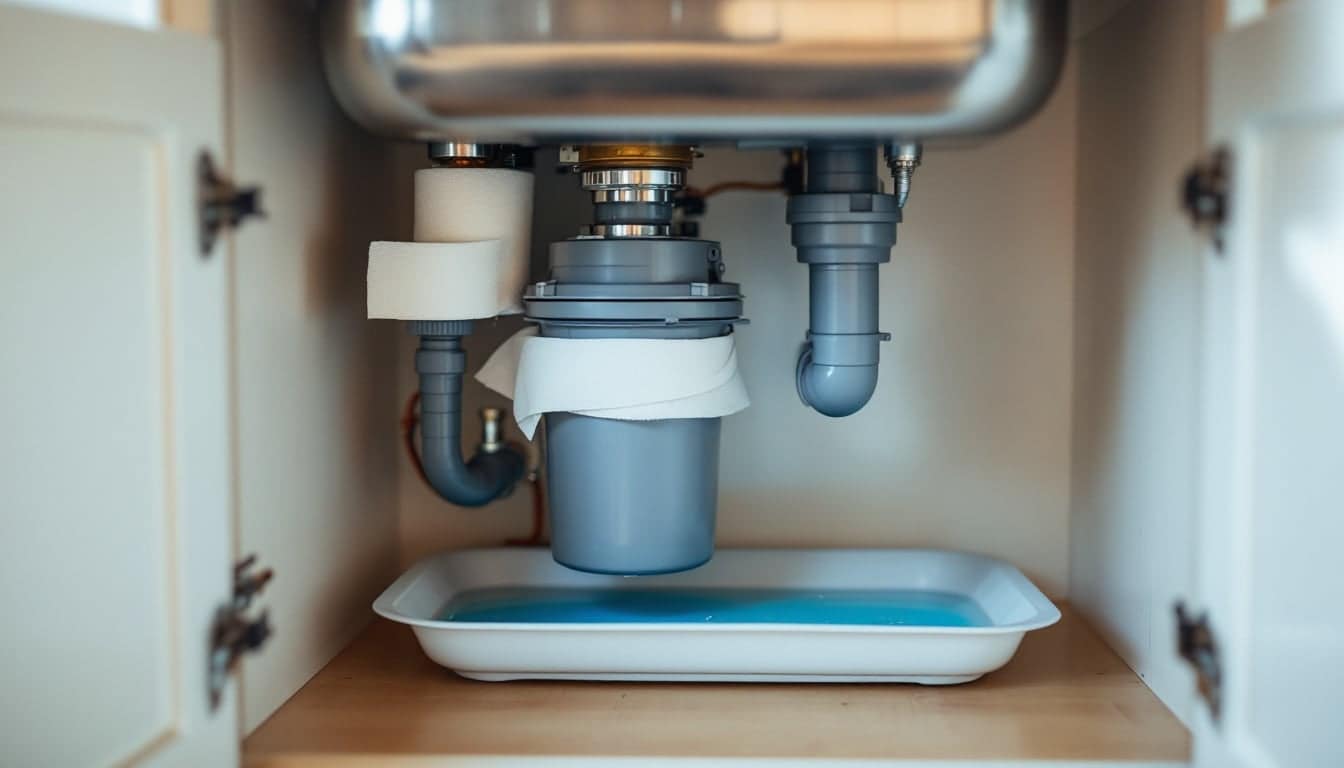
- Worse after baths or showers upstairs, but not after rain: a waste, trap or seal. Fill and empty the bath alone and check below after an hour, then run the shower alone on another day.
- Steadily worse whatever the weather or water use: a pressurised supply or heating pipe. Confirm with a water meter leak test, or watch the boiler gauge as described in our guide to a combi boiler losing pressure.
- Worse on cold mornings and after cooking or drying clothes, better with windows open: condensation. A cheap hygrometer helps here; many guides suggest keeping indoor relative humidity roughly between 40 and 60 per cent.
- There all year at the base of a wall: rising damp or a bridged damp-proof course.
Differential-diagnosis table
| Clue | Condensation | Rising damp | Penetrating damp | Plumbing leak |
|---|---|---|---|---|
| Where | Cold outside walls, corners, window reveals, behind furniture | Base of ground-floor and basement walls | Exposed walls, under gutters, round windows and chimneys | Along pipe routes, under bathrooms and kitchens |
| Height | Any, often high corners | Floor upwards, rarely much over a metre | Any | Any, including ceilings |
| Season | Worst in cold months | All year | Wet, windy spells | Any time |
| After rain | No change | Little or slow change | Appears or darkens, sometimes after a delay | No change |
| After using water | Worse in the steamy room itself | No change | No change | Waste and seal leaks worse below; supply leaks constant |
| Foil test | Moisture on room side | Wall side | Wall side | Wall side |
| Salts and tide marks | Rare; black mould spots instead | White salt band, level tide line | Tide marks after wet spells | Tide marks, sometimes rings |
| Meter and boiler gauge | Steady | Steady | Steady | Meter moves for a supply leak; gauge falls for a heating leak |
When two causes overlap
A wall wetted by a leak or by rain conducts heat better than a dry one, so its surface runs colder and attracts condensation as well. Salts left by an old leak keep drawing moisture from the air after the pipe is fixed. Deal with the most likely cause first, keep the diary going and repeat the tests. Wet masonry can take many weeks, sometimes months, to dry, so judge progress by readings that fall over time, and hold off redecorating until they have.
Who to call
- Condensation usually needs household changes: extractor fans that actually run, trickle vents left open, steadier heating, laundry dried outside or in a vented dryer. Insulation and ventilation upgrades may count as building work, and the rules on that differ by country.
- Rising or penetrating damp calls for a building surveyor who is independent of any treatment company, then a builder or roofer.
- A plumbing leak confirmed by the meter or the gauge needs a plumber or a leak detection specialist to pinpoint it. The water leak detection guides explain what that involves.
- Water near electrical fittings needs an electrician before anything is switched back on, and new or widening cracks need a qualified structural professional.
Whatever the answer, keep the diary and the photos: a dated record of how a patch behaved is the most useful thing you can hand to whoever comes to look.
Tools for this job Toolbox: Leaks and damp

Kerem Yalçın
Kerem covers leaks, damp and the detective work in between: meter tests, moisture readings and the non-destructive methods used to find a leak without opening every wall.
General guidance only. Gas, electrical and structural work must be done by a suitably qualified person, and rules differ from country to country.