Pipes aren't supposed to make much noise. A gentle rush while a tap runs, a cistern refilling. That's about the full repertoire. Anything louder is the plumbing trying to tell you something, and each noise means something different.
Most pipe noise is cheap to fix. The awkward part is finding it, because sound travels along pipework in strange ways. A bang that seems to come from the bathroom can start at the washing machine two rooms away. So listen before anyone lifts a floorboard.
Start with a listening session
Ten minutes and a helper will save you a lot of guessing.
- Pick a quiet time, with the washing machine, dishwasher and heating all off.
- Stand somewhere central, near where the noise seems loudest.
- Get your helper to open and close each tap in turn, first slowly, then quickly. Then flush each toilet.
- Note which outlet sets the noise off, and whether it happens as the water starts, while it runs, or as it stops.
- Repeat while the heating comes on from cold, and again as it switches off.
- Run the washing machine and listen as each fill starts and stops.
Write it down. "Bang when the kitchen mixer is flicked off" is a diagnosis. "Noises" isn't.
The sound index
| Sound | When you hear it | Most likely cause |
|---|---|---|
| One loud bang or thud | A tap or appliance valve shuts | Water hammer |
| Fast knocking or juddering | While a cistern or tank fills | Float valve bouncing |
| Rattle or clatter | Whenever water runs | Loose clips, unsupported pipe |
| Ticking or creaking | Heating warming up or cooling down | Expansion against timber or clips |
| Rumble, like a kettle | Boiler firing | Scale or sludge in the heat exchanger |
| Hum or drone | Water running, or a cistern nearly full | Worn washer vibrating, high pressure |
| Whistle or squeal | Water running, or heating on | A restriction somewhere |
| Hiss, with nothing in use | Night-time | Cistern topping up, or a leak |
Now the detail, one noise at a time.
Banging: water hammer
What it sounds like
A single hard bang, sometimes followed by a couple of smaller shudders, at the exact moment the water stops. Loud enough to make people look up from the sofa.
Why it happens
Water moving through a pipe has weight and momentum. Stop it dead and that energy turns into a pressure spike that runs back along the pipe and makes it jump. If the pipe sits near a joist or a wall, you hear it hit.
The usual triggers all close fast:
- Washing machines and dishwashers. Their inlet valves are electrically operated and snap shut instantly. A bang several times per wash is the classic sign.
- Quarter-turn ceramic taps and single-lever mixers. Flick one off and the flow stops in a fraction of a second. Old washer taps needed several turns to close, which was slow enough to be gentle.
- Push-button and sensor valves, and outside taps with lever handles.
High mains pressure makes every one of these worse. More pressure means faster water and a bigger spike.
What to do
- Close taps gently. It sounds daft. It works, and it confirms the diagnosis.
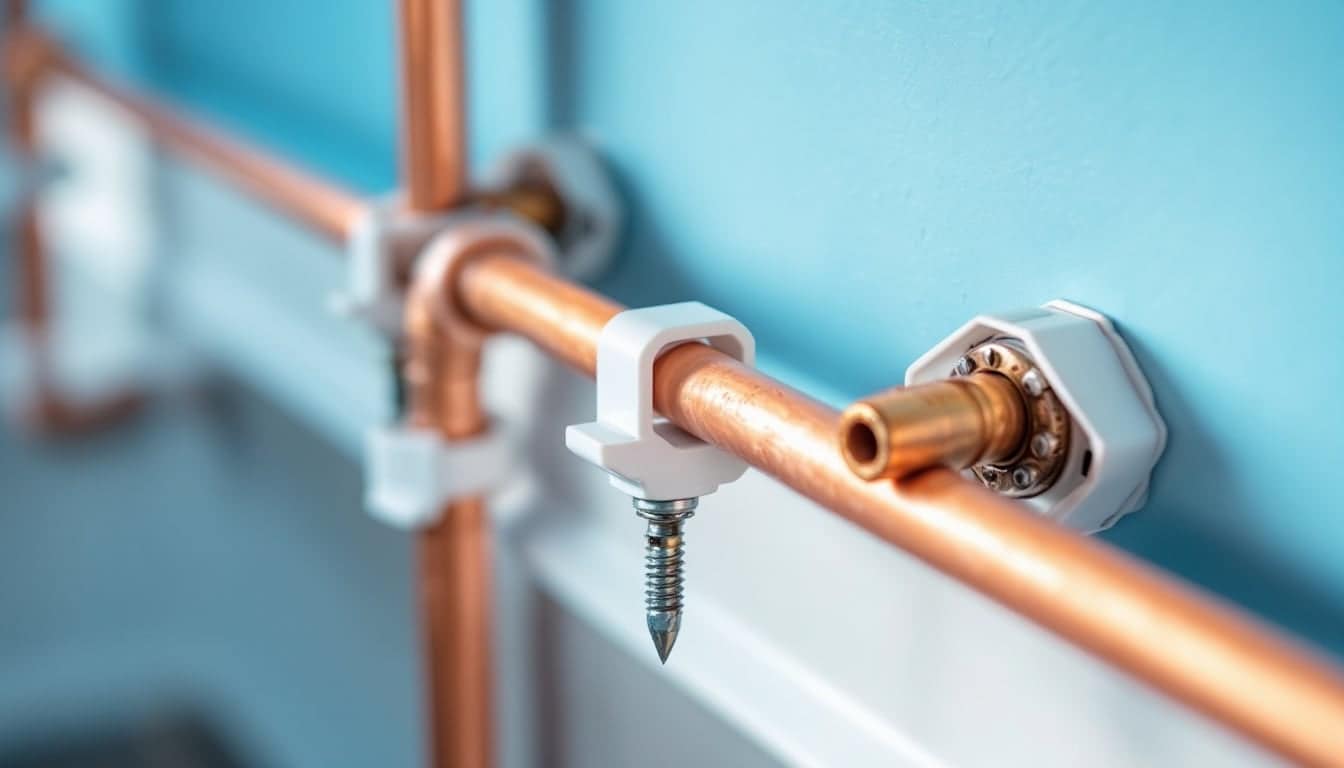
- Clip the pipes. A pipe that's held firmly can't swing far enough to hit anything. Clips get their own section below.
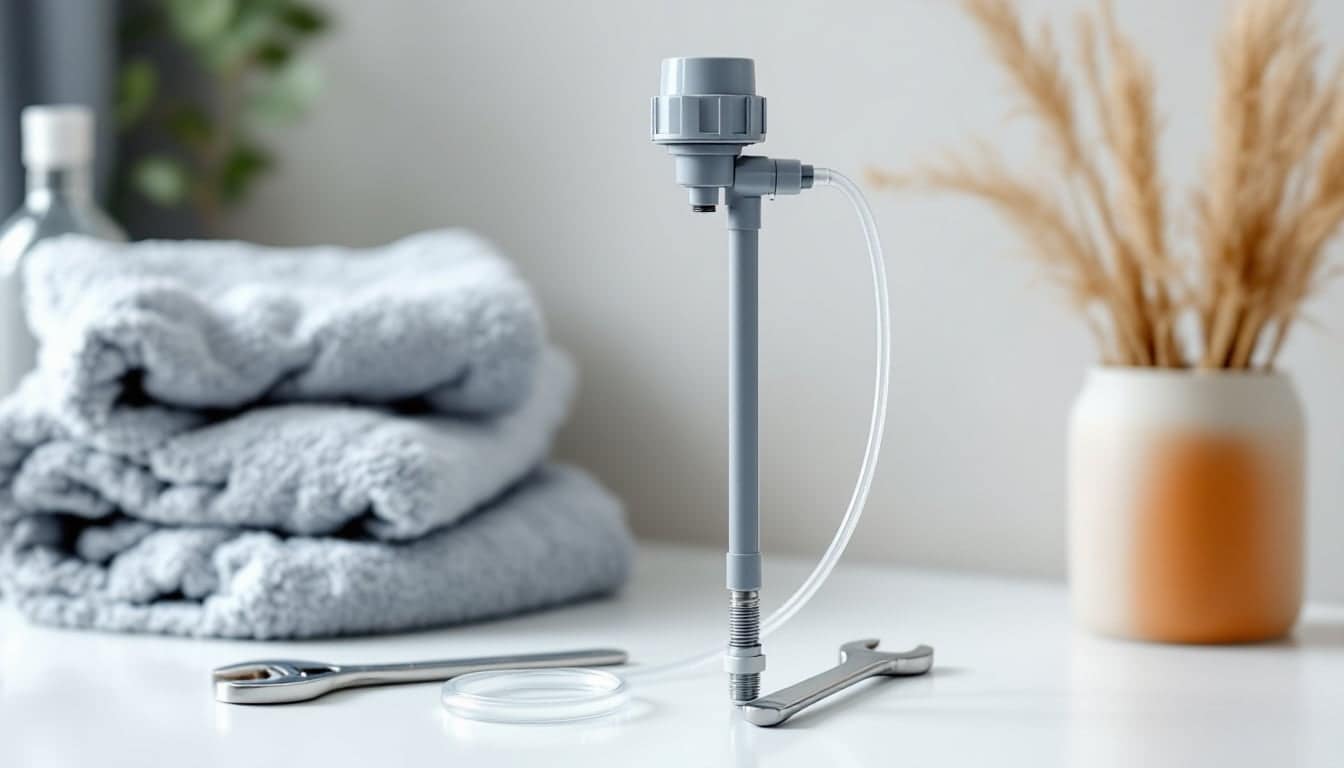
- Fit an arrestor. A water hammer arrestor is a small sealed unit with a cushion of air or a sprung piston inside. Fitted close to the offending valve, it soaks up the spike. Some screw on between an appliance valve and its hose; plumbed-in types are a plumber's job.
- Check the pressure. If static pressure is high, a pressure-reducing valve (PRV) on the incoming main calms everything at once, and it's kinder to taps, hoses and appliances. A screw-on gauge tells you where you stand; the method is in our guide to low water pressure causes. Compare the reading with the maximum working pressure in your appliance and tap instructions. Fitting a PRV is a plumber's job.
Some older homes, particularly in North America, have air chambers near the taps: capped stubs of pipe holding a cushion of air. Over the years they fill with water and stop working until the system is drained down.
Don't ignore hammer because you've got used to it. Every bang strains joints, valves and appliance hoses.
Knocking and juddering while a cistern fills
What it sounds like
A fast, repeated knock, like a spanner tapped on the pipe, lasting as long as a cistern or loft tank is filling.
Why it happens
As the water rises, ripples bounce the float up and down. The valve opens and closes many times a second, and each tiny closure is a small dose of water hammer. Old brass float valves on long arms are the usual offenders, especially on high mains pressure.
What to do
- Make sure the pipe feeding the cistern or tank is clipped firmly, right up to the valve.
- Fit a modern fill valve. Newer designs bounce far less, and swapping one in a toilet cistern is a reasonable DIY job.
- On a loft tank, a damper (a small pot hanging in the water below the float) steadies things, or an equilibrium valve can replace the old type.
Rattling: loose clips and slack pipes
What it sounds like
A steady clatter or buzz while water is running, often from under the floor or behind the kitchen plinth.
Why it happens
Pipes are meant to be fixed at regular intervals. Screws work loose, clips crack, and whoever fitted the new kitchen cut a pipe free and forgot to refix it. A long unsupported run vibrates and taps against whatever's nearest.
What to do
- Find the run. Lift a floorboard where the noise is loudest, or pull off the plinth under the kitchen units and look along with a torch.
- Look for pipes sagging between clips, clips hanging off, and pipes resting directly on timber or masonry.
- Add clips where the gaps are long. Plastic pipe needs support more often than copper, because it's more flexible.
- Where a pipe has to touch a joist, slip foam lagging or felt between them.
- If a run flops about across a void, re-route it or fix a batten to clip it onto.
Don't clamp heating pipes rigidly in tight metal clips. They need room to move, which brings us to the next noise.
Ticking and creaking: expansion
What it sounds like
A tick, tick, tick, or a slow creak, as the heating comes on, and often again as it cools. You'll hear most of it on the first cold evenings of autumn, when the heating starts doing real work again.
Why it happens
Metal pipes get longer as they warm and shorter as they cool, and over a long run copper moves more than you'd think. If something grips the pipe, it can't slide smoothly. It sticks, builds tension, then jumps a fraction. Tick. Notches cut too tight in joists, pipes pressed against floorboards, and pipes clamped in metal clips are the usual spots. Radiators on their brackets can do it too.
What to do
- Ease tight notches so the pipe sits loose.
- Put felt, foam or plastic sleeving where pipes pass through joists, floors and walls.
- Swap tight metal clips on heating pipes for plastic ones that hold the pipe without strangling it.
- If a radiator creaks on its brackets, a sliver of felt or plastic between radiator and bracket often quietens it.
Expansion noise doesn't damage anything. It's just irritating. Fix it next time the floorboards are up, unless it's keeping you awake.
Rumbling: a boiler that sounds like a kettle
A low rumble or rolling boil from the boiler itself is known as kettling. Water is overheating in patches inside the heat exchanger because something restricts the flow. On the hot water side of a combi in a hard-water area, that's often scale; our piece on hard water and limescale explains how it builds up. On the heating side, sludge is the usual culprit. The radiator cleaning and combi boiler care hub covers sludge, flushing and what a service should include.
Anything inside a gas boiler is work for a qualified heating engineer, registered where your country requires it. Leave the case on.
Humming and droning
What it sounds like
A steady hum through the pipes while water runs, sometimes rising in pitch. Occasionally it starts only when a cistern is nearly full.
Why it happens
- A worn or loose washer in a tap, stopcock or valve vibrates in the flow like the reed in a clarinet.
- A fill valve that's almost shut lets water through a narrow gap, which can drone just before it closes.
- High pressure pushes everything harder and makes resonance more likely.
- On a heating system, a pump set faster than it needs to be can hum through the pipework.
What to do
Find the trigger. If the hum comes with one tap only, a new washer or cartridge usually stops it. A worn stopcock needs a plumber. A droning fill valve wants cleaning or replacing. Pump speeds are for a heating engineer.
Whistling and squealing
A whistle nearly always means water is being squeezed through a gap smaller than it should be.
- A part-closed isolation valve or stopcock. Open it fully. Common after a repair.
- Scale or grit in a fill valve, tap aerator or shower mixer. Clean or replace the part.
- A worn washer that's partly come loose.
- Radiator valves nearly closed while the pump pushes hard. A heating engineer can balance the system.
Hissing, with nothing in use
A hiss or trickle late at night isn't really a pipe noise. It's water going somewhere: a cistern quietly topping itself up, or a leak. Our list of signs of a hidden water leak explains how to tell them apart, starting with closing the stopcock and listening again.
Who fixes what
- You: clips, padding, gentler tap habits, screw-on arrestors, cleaning aerators, swapping a cistern fill valve.
- A plumber: plumbed-in arrestors, pressure-reducing valves, re-routing pipes, stopcock replacement.
- A heating engineer: anything inside the boiler, pump settings and balancing the radiators.
Start with the listening session. Most noises give themselves away within minutes once someone else is working the taps.
Work it out Water pressure converter

Owen Pritchard
Owen handles everyday repairs (dripping taps, weak showers, blocked loos) and has firm views on coat hangers, caustic soda and anything sold as "flushable".
General guidance only. Gas, electrical and structural work must be done by a suitably qualified person, and rules differ from country to country.